Jewish Wedding Photographer Miami & South Florida
As a wedding photographer in Miami, I have nearly two decades of experience photographing the beauty and depth of traditions in Jewish wedding celebrations throughout South Florida. From Modern Orthodoxy to Reform, Conservative, and every level of faith in between, I understand that no two Jewish wedding celebrations are alike. Traditions can vary and depend largely on a couple’s level of observance. But there are a few pivotal moments that I often prepare a wedding photography timeline around. Through the details below, we’ll take a look at the defining moments of a Jewish wedding and how I approach preserving each memory through an unforgettable wedding photography experience.
- Ketubah Signing
- Tisch
- Carrying the Groom to the Bedeken
- Bedeken
- Chuppah
- Processional & Circling
- Seven Blessings (Sheva Brachot)
- Vows and Ring Exchange
- Breaking the Glass
- Hora
- Jewish Wedding Photography
Jewish Wedding Photography – Capturing the Moments that Matter Most
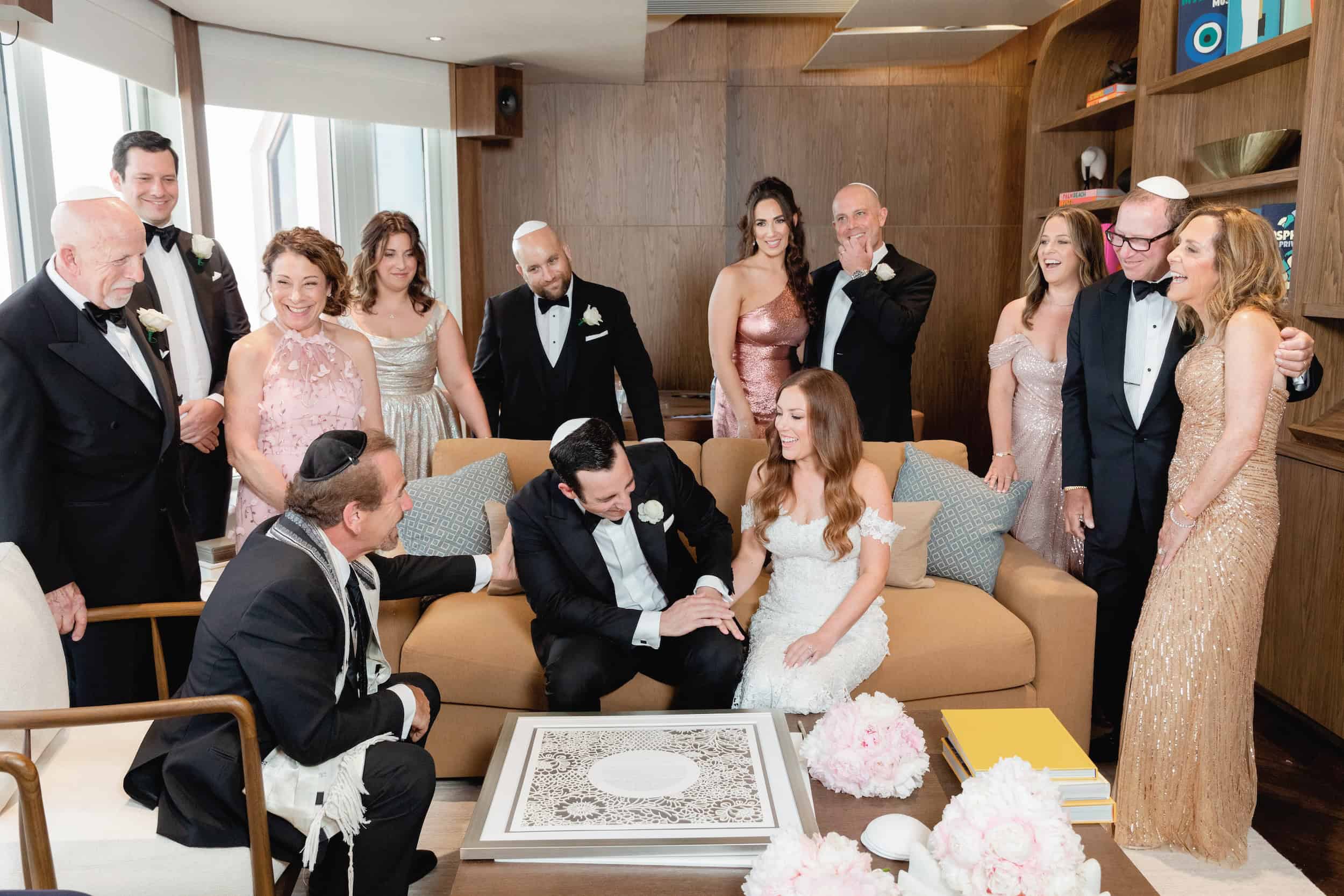
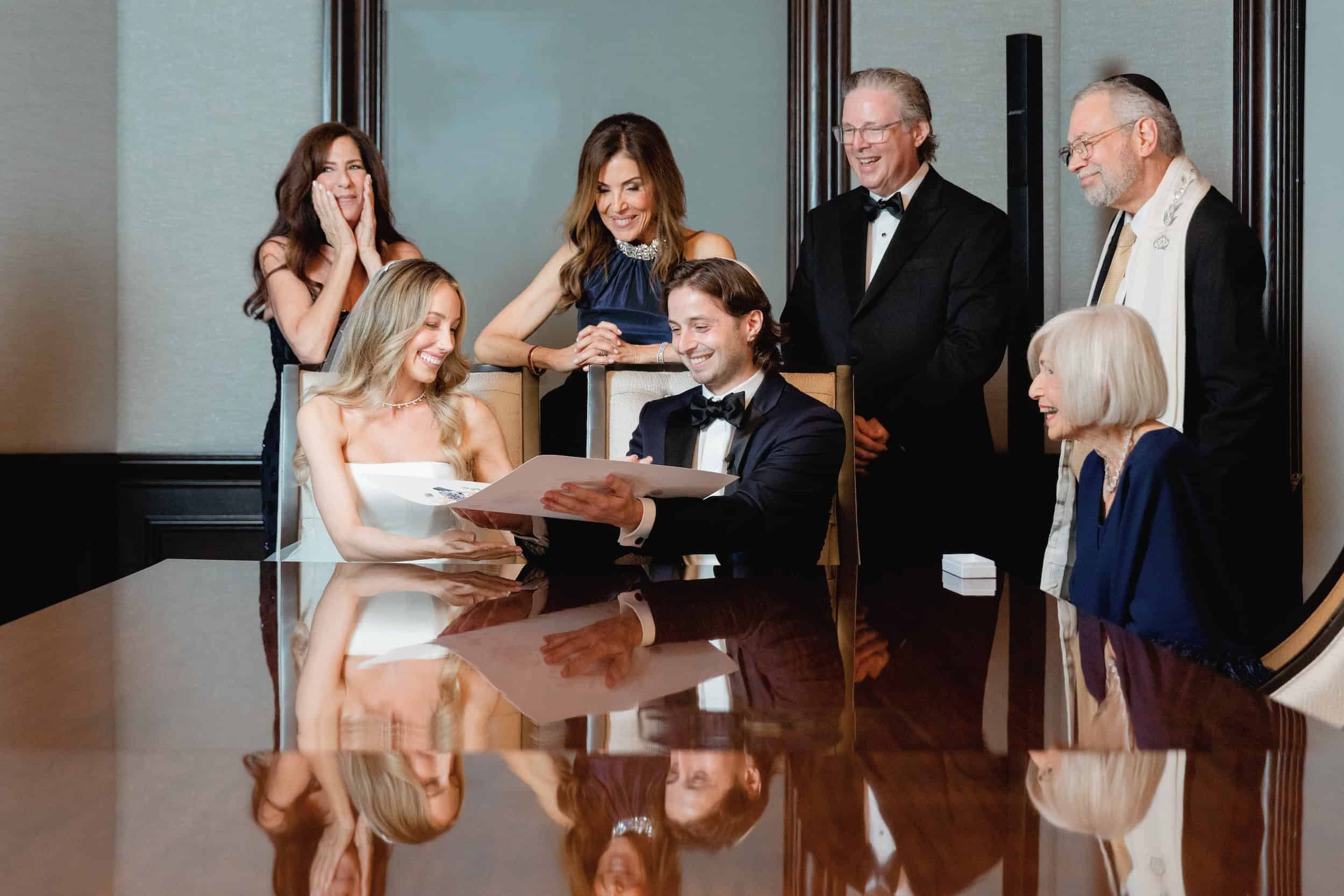
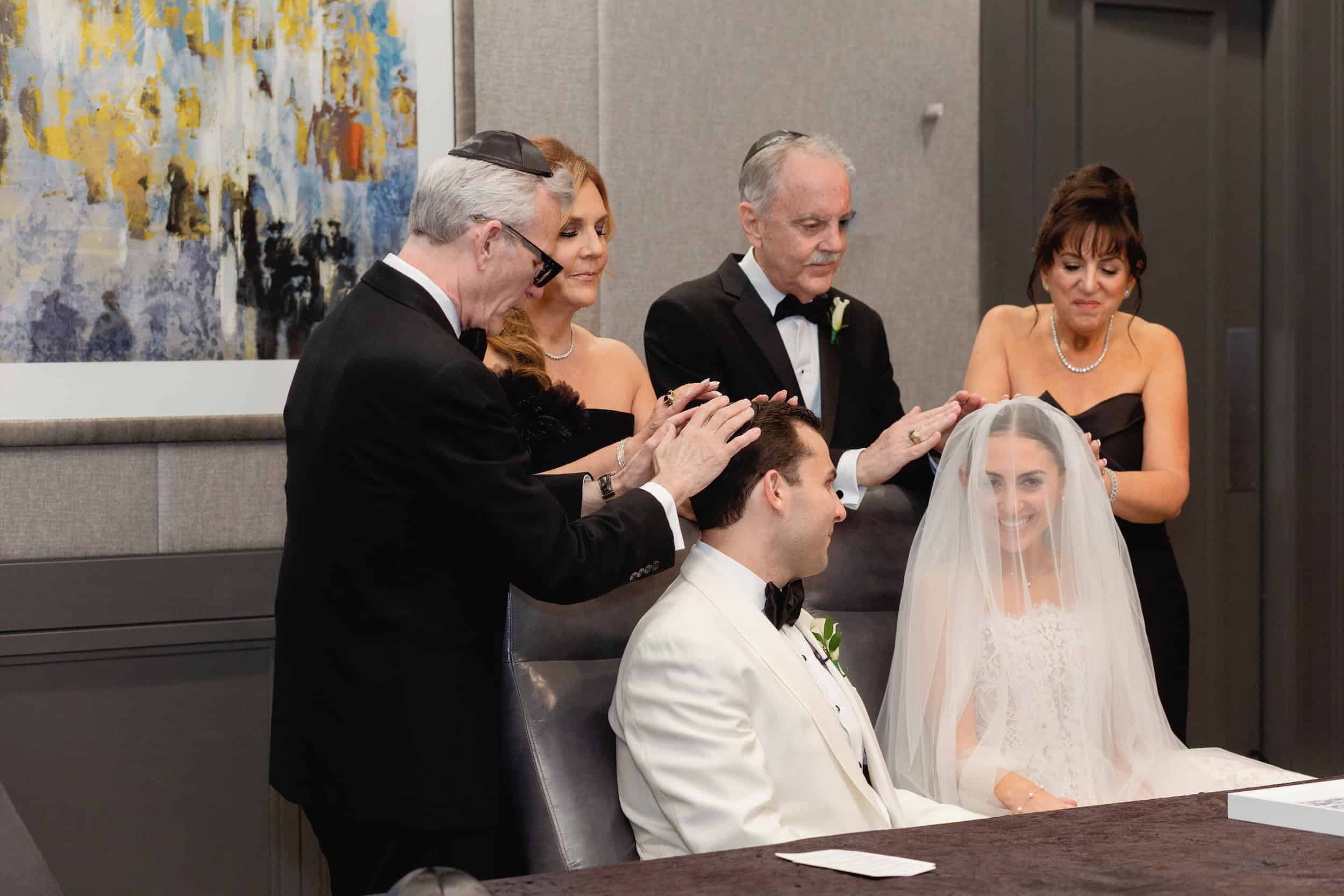
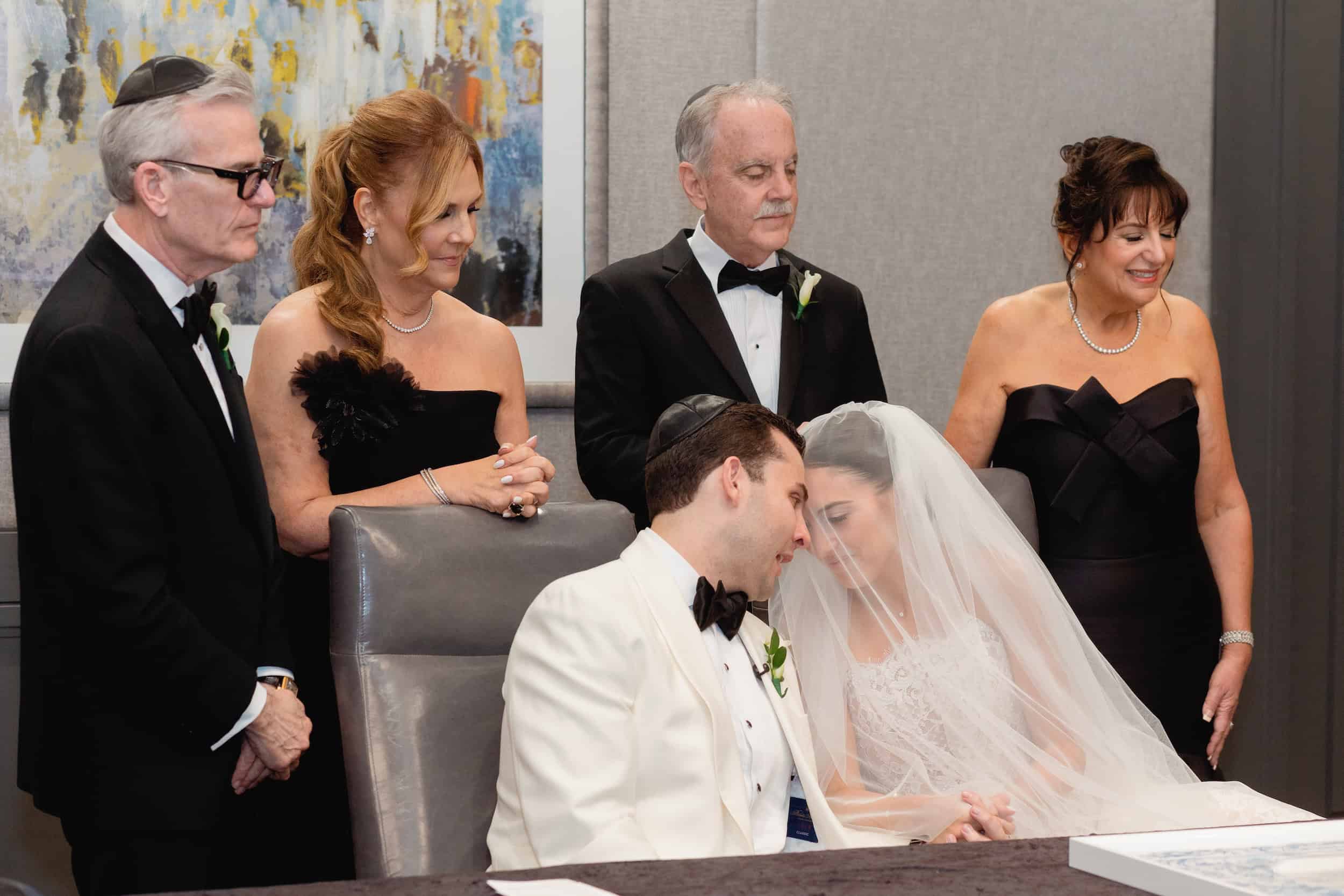
The Ketubah Signing
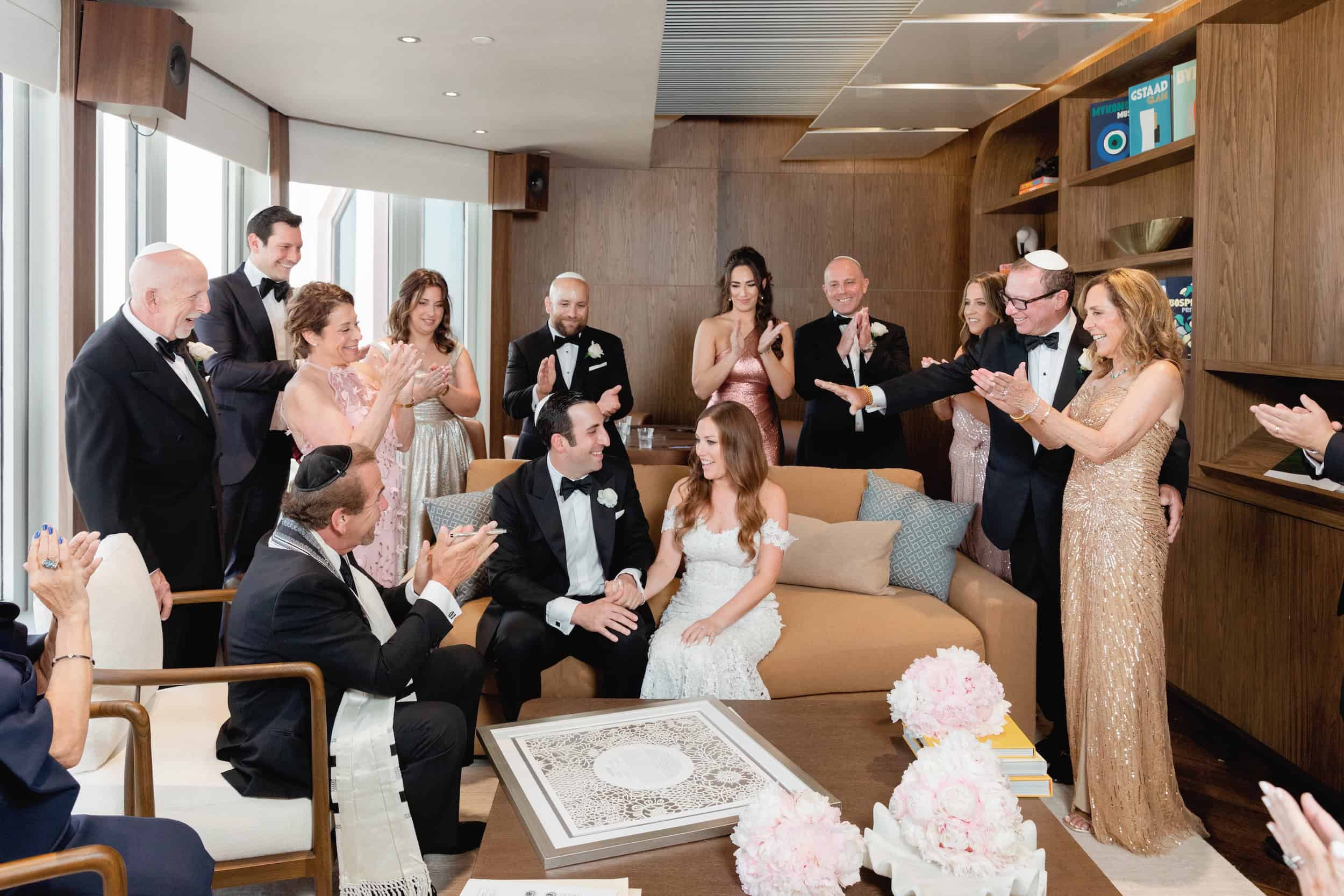
Before the start of a Jewish wedding ceremony, the couple will sign a Ketubah, a Jewish wedding contract. During this moment, they’ll be surrounded by their immediate family members and closest friends, who will bear witness to the occasion. Jewish weddings honoring a traditionally structured day will sign the ketubah as part of tisch (more on this ritual below). However, through Reform and Conservative Jewish weddings also practice the signing of the Ketubah, it typically occurs earlier in the day.
Photographing the signing of the Ketubah is always deeply personal, filled with the genuine emotion shared by everyone in the room, shaping the experience of the wedding ceremony to come. When the ceremony, taking place under the Chuppah, does arrive, the Ketubah is still an integral part and is either read aloud or displayed nearby.
The Tisch
In traditional Judaism and Orthodox weddings, the groom hosts a pre-wedding celebration known as a Tisch (the Yiddish word for table). This fun-filled reception occurs before the start of the formal wedding ceremony, where the groom will be surrounded by family members and friends. The Tisch is comprised of many parts, including a toast, brief Torah study, and a lively celebration with singing and drinking. Some good-natured heckling is also known to occur as the groom tries to say a few words on the parsha (a portion of the Torah). During the Tisch, in a separate room, the bride is often holding her own reception, receiving guests who shower her with well wishes and blessings.
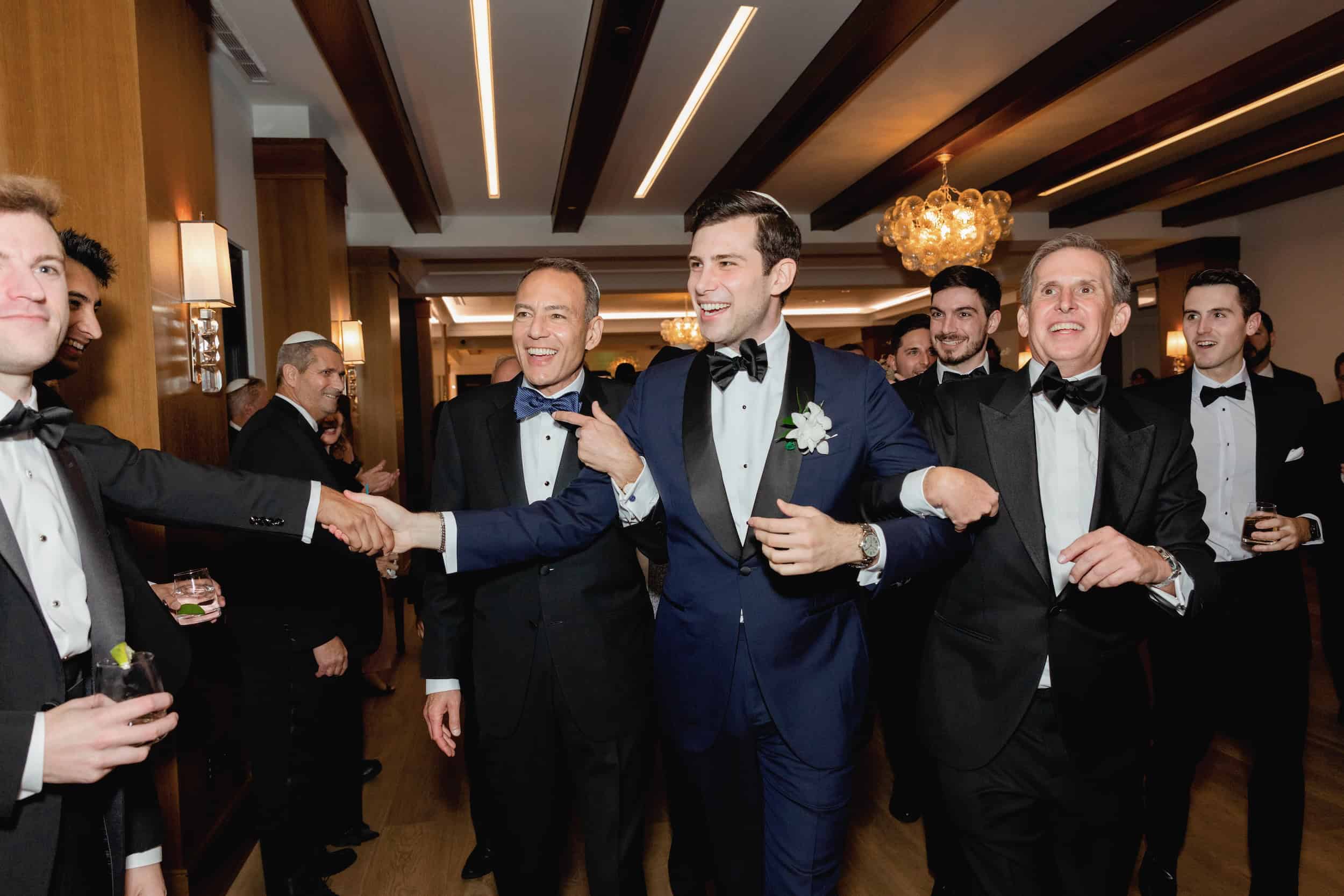
Carrying the Groom to the Bedeken
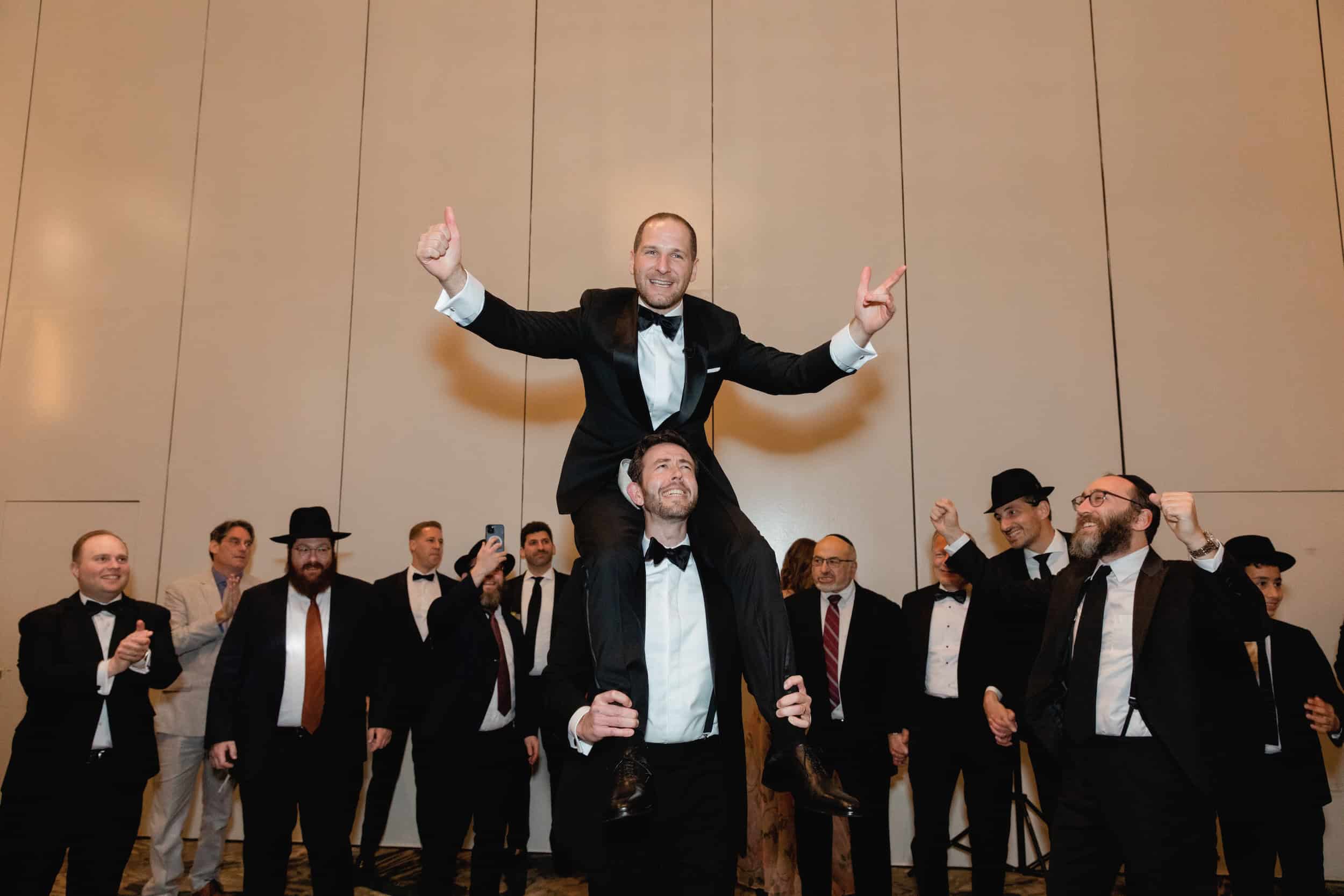
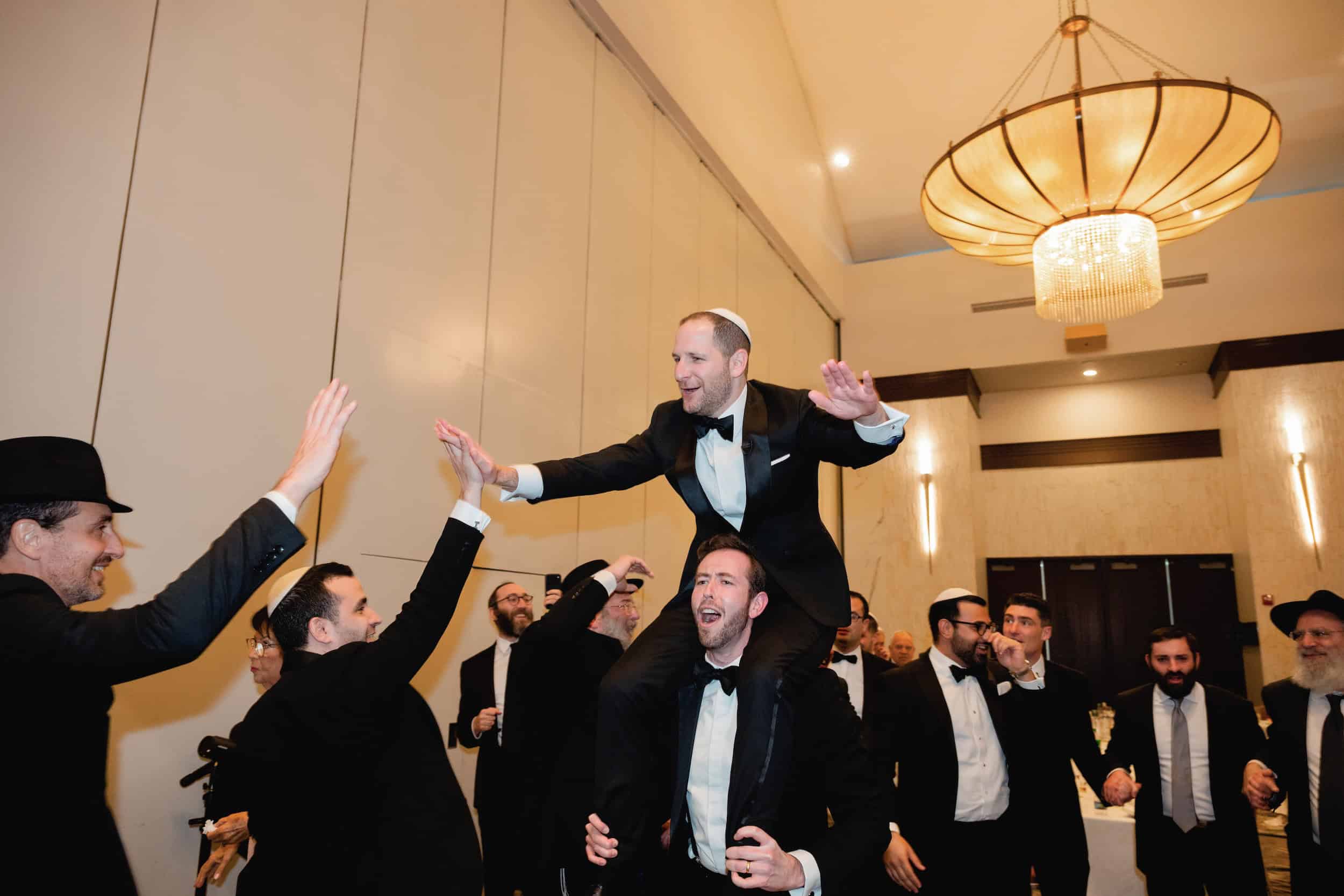
Once the Tisch has reached its peak and the energy is flowing, the groom’s friends & family will lift him onto their shoulders or link arms around him, and half carry, half dance him out of the room, on his way to veil his bride. The carrying of the groom to the Bedeken is a loud, cheerful, completely unscripted celebration with a beautifully vibrant sense of shared energy.
As a Jewish wedding photographer, I can attest that this pre-wedding ceremony tradition always produces emotionally charged photos. It’s not uncommon for guests to spill out in all directions, with those closest to the couple directly surrounding them. My approach to photographing the beauty of this moment is to convey perspective in different forms, from high above the crowd, to the entryway to the space, and up close with the bride and groom, capturing their reactions and affections when they see each other for the first time.
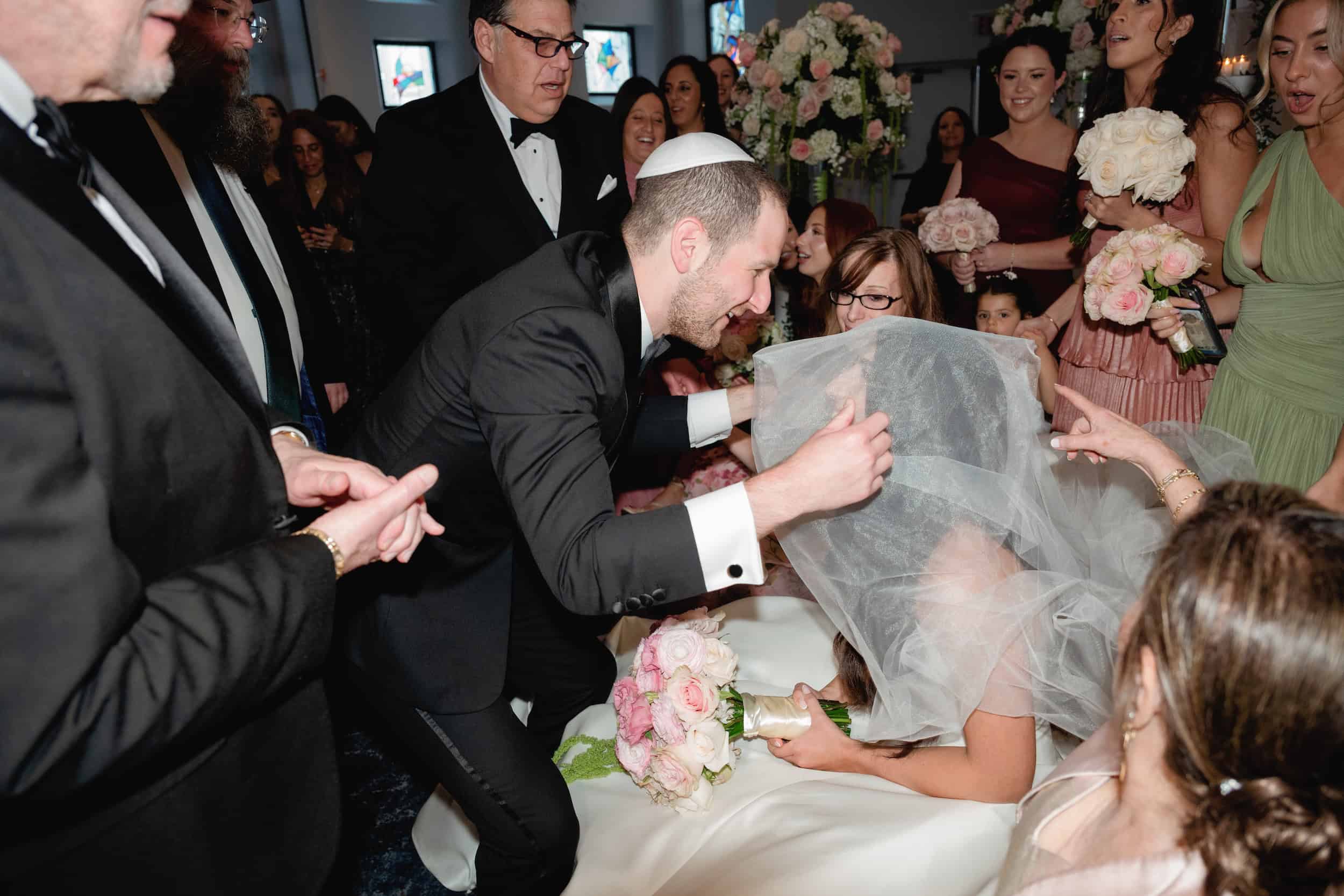
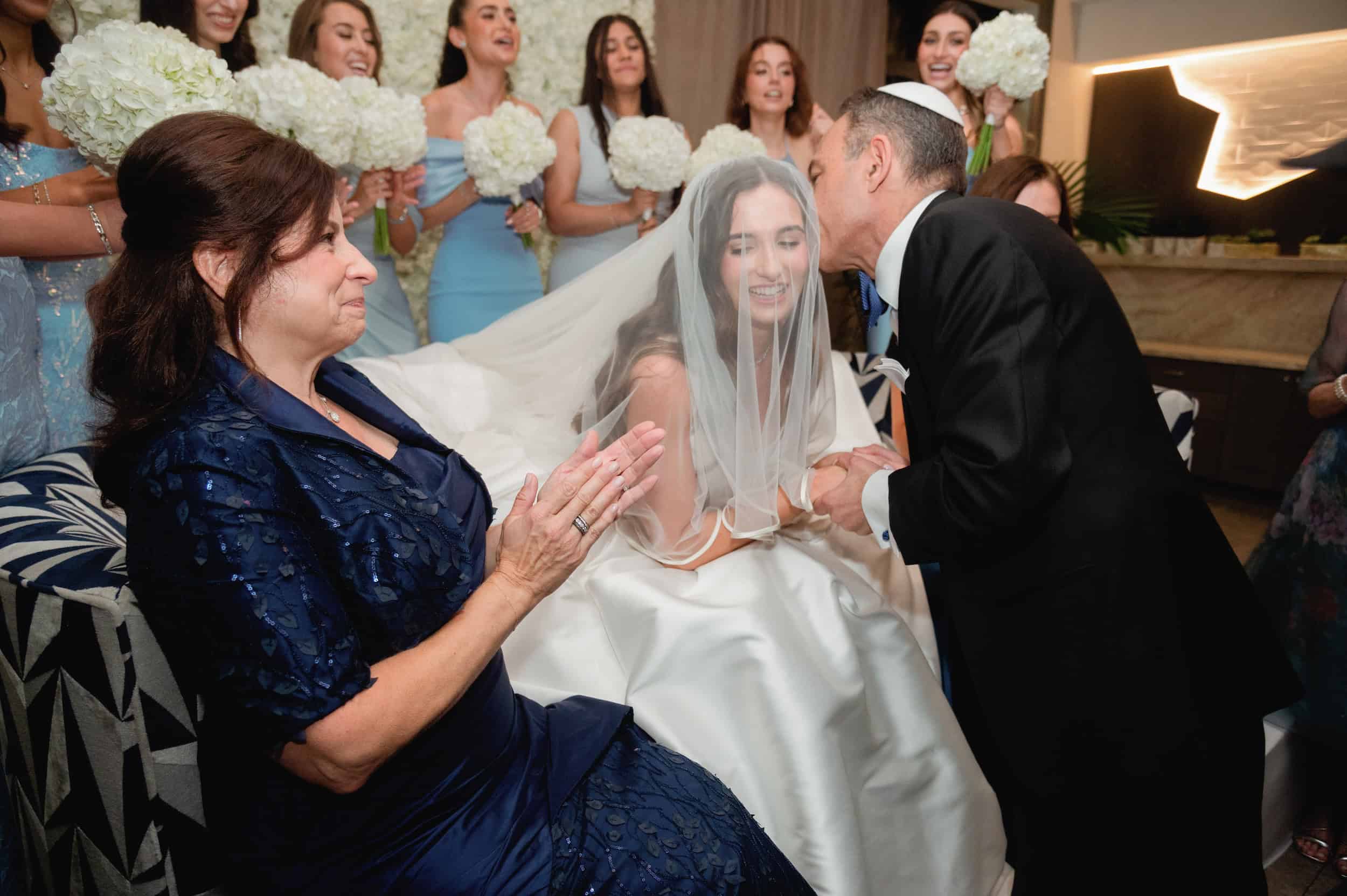
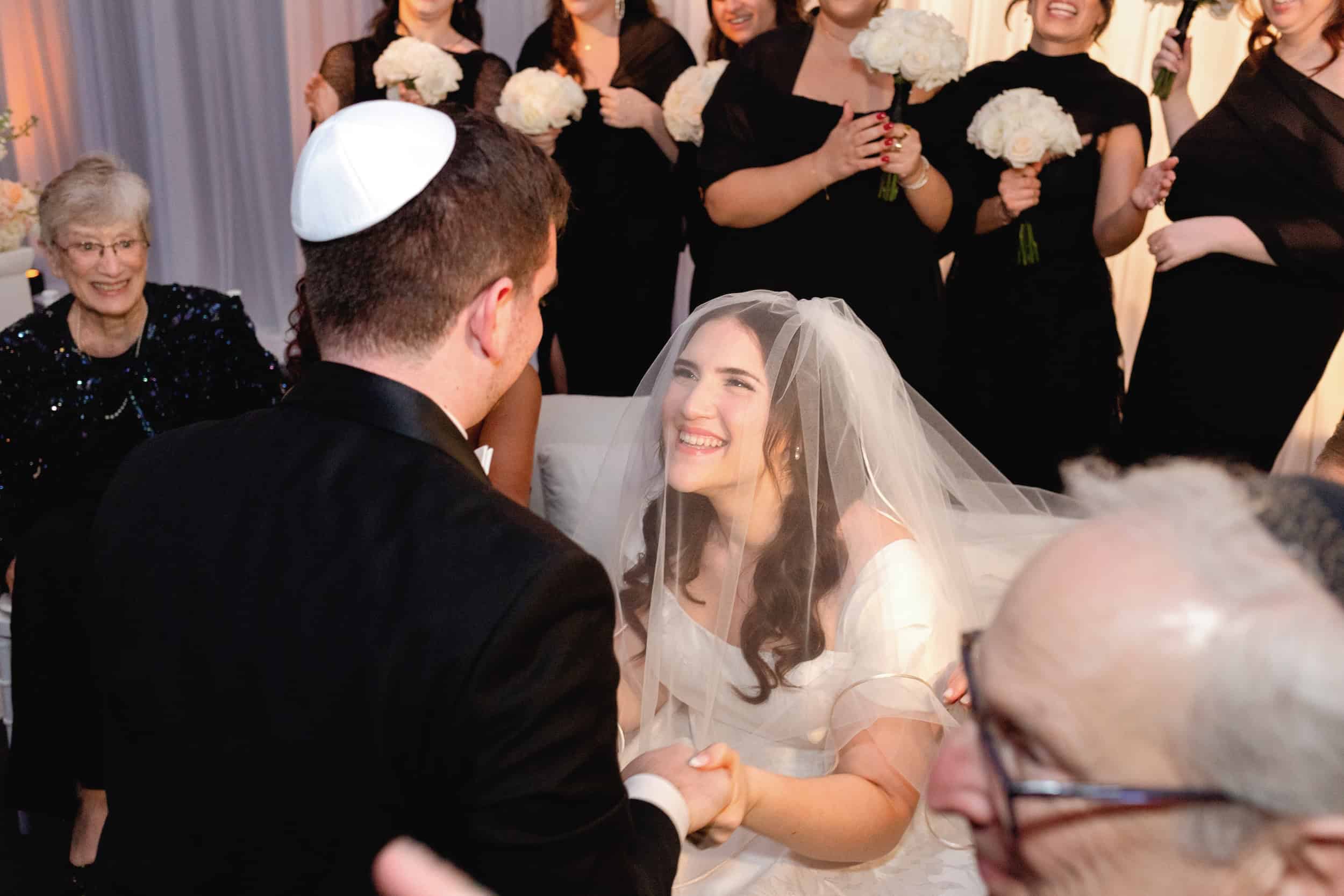
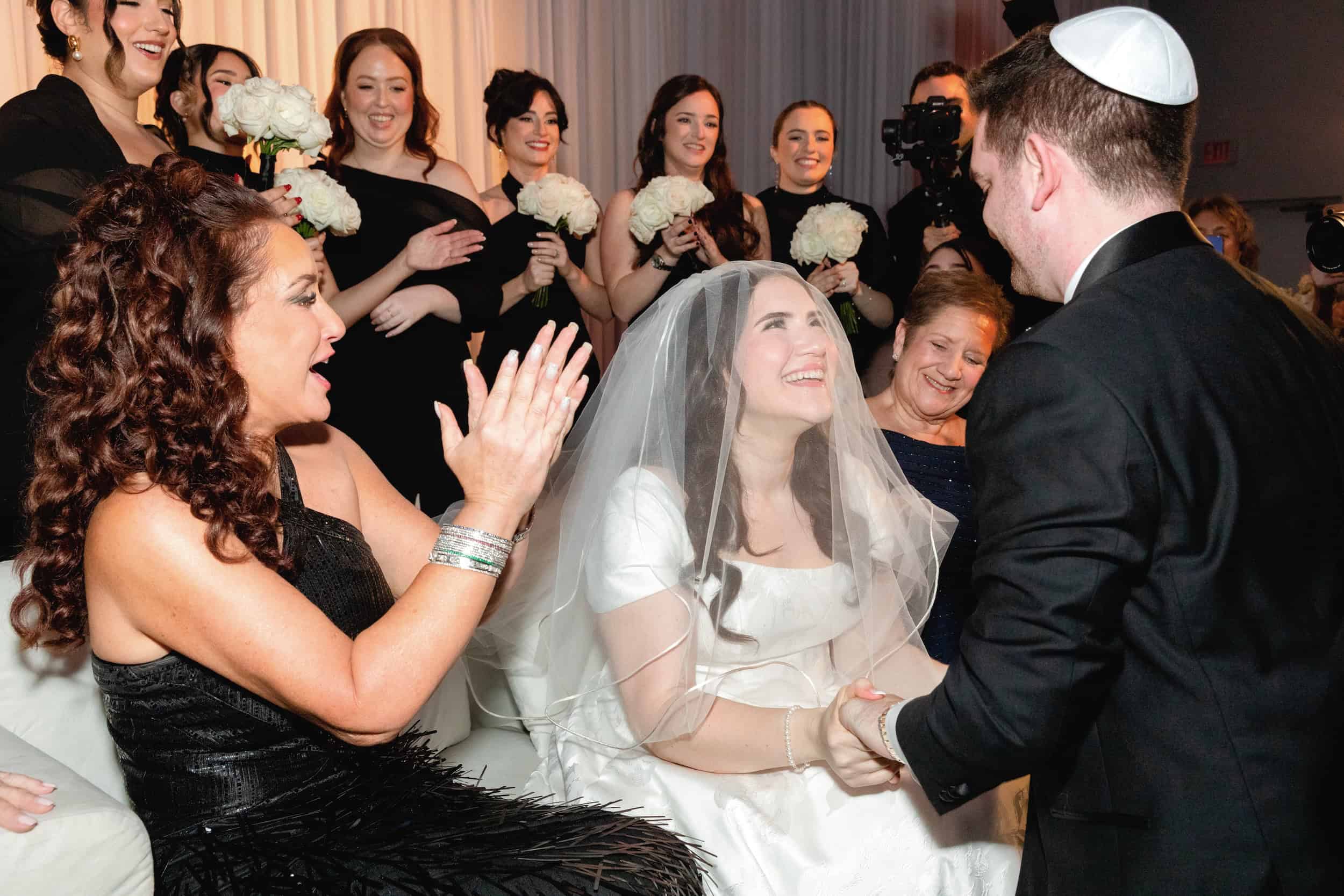
The Bedeken (Veiling Ceremony)
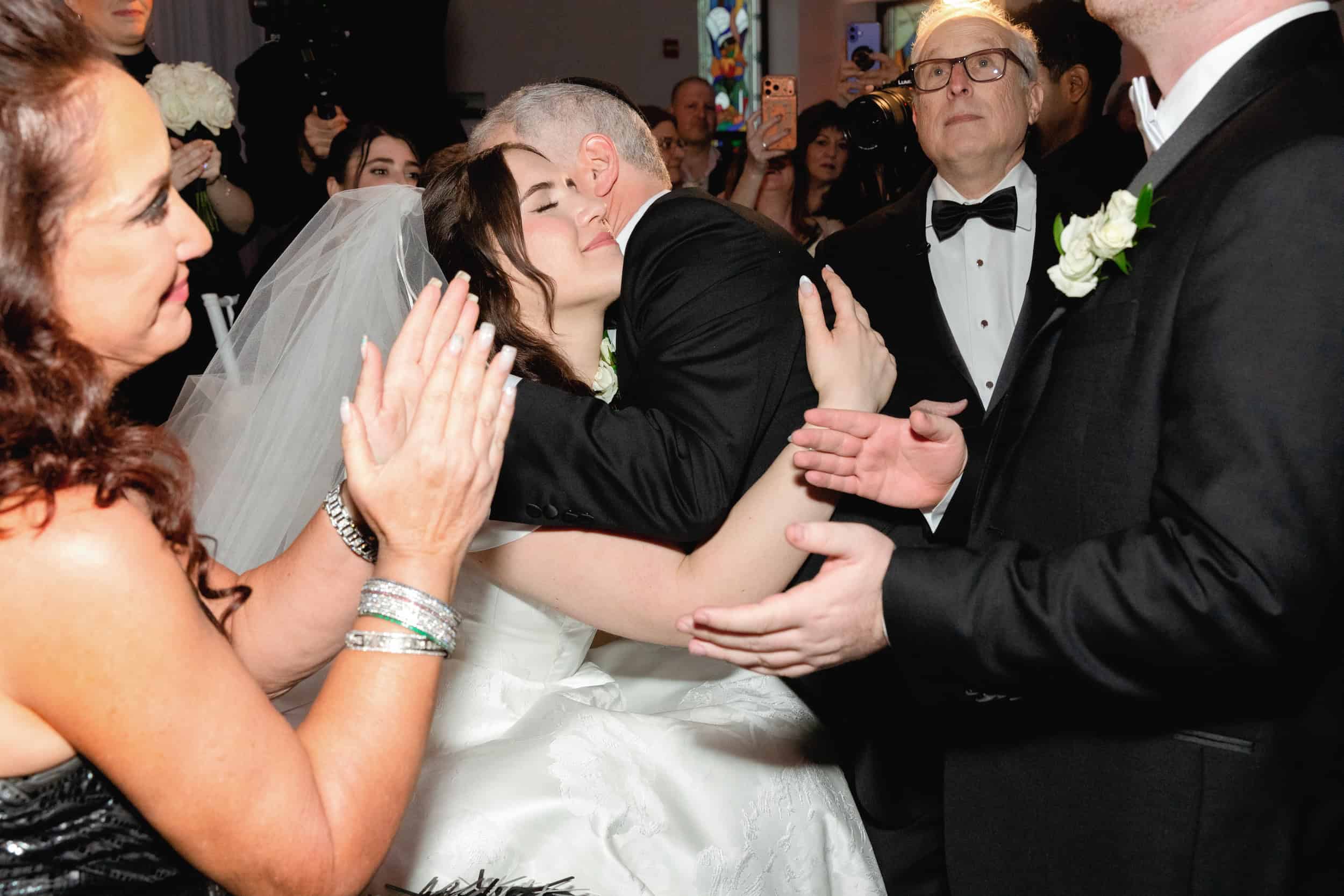
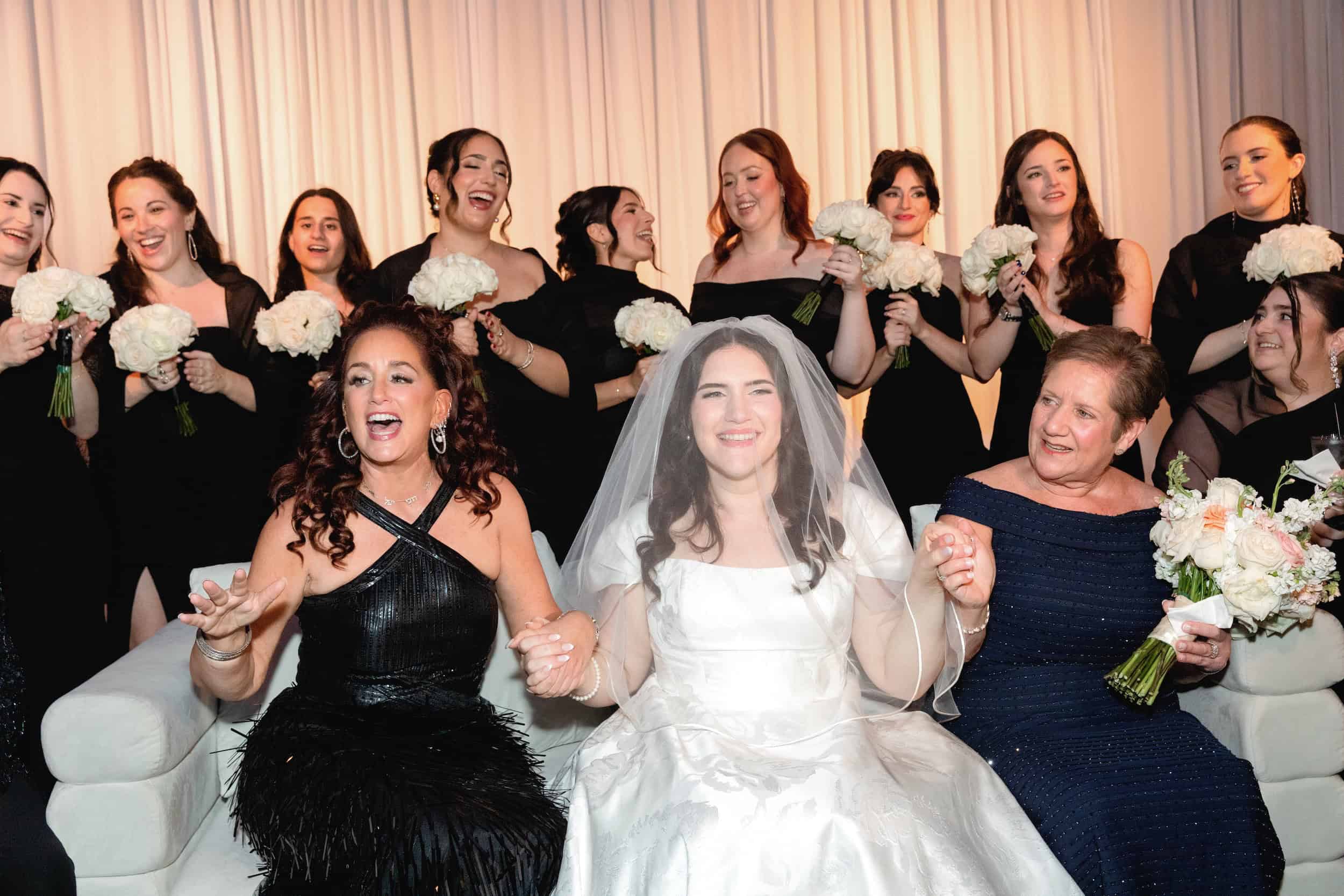
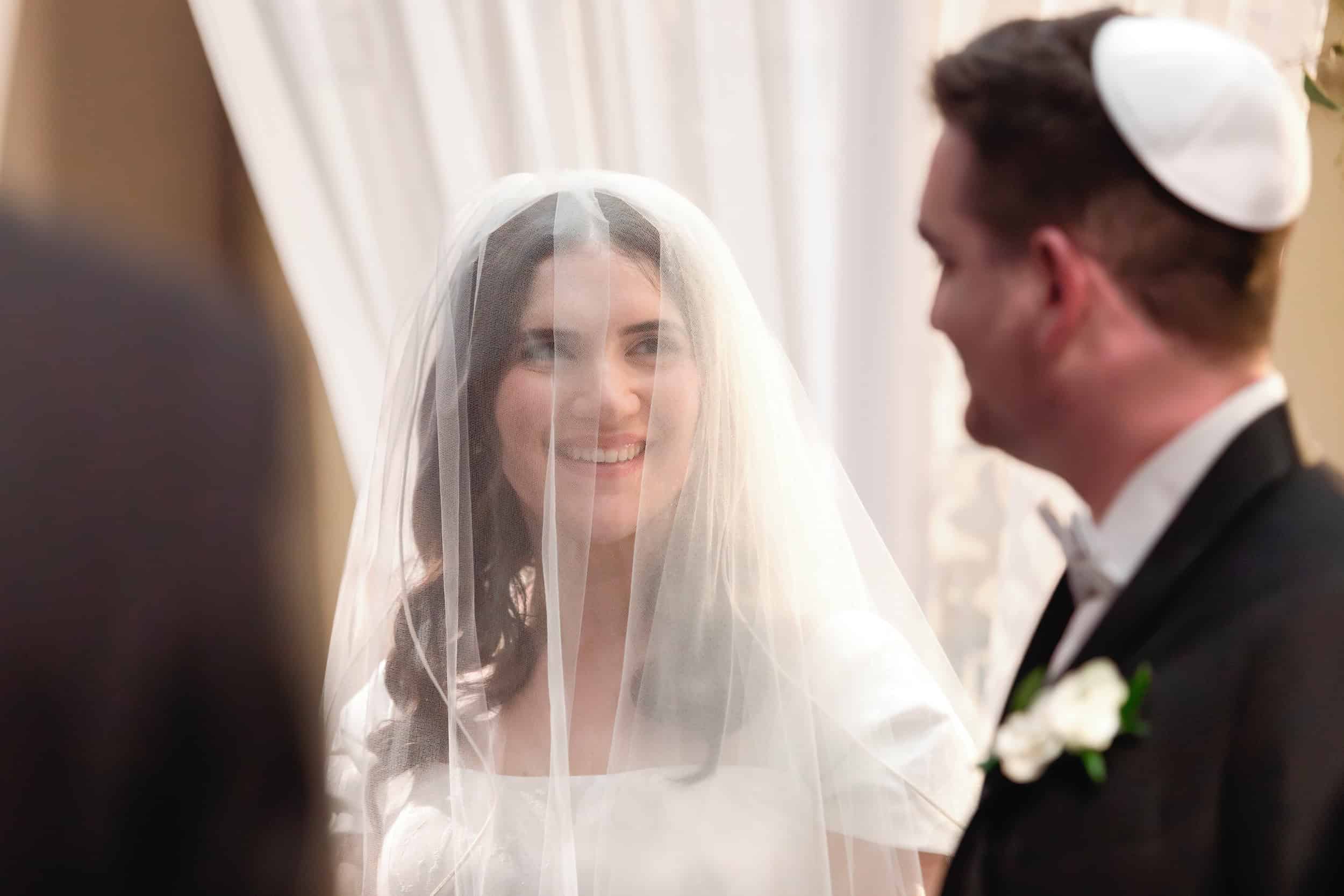
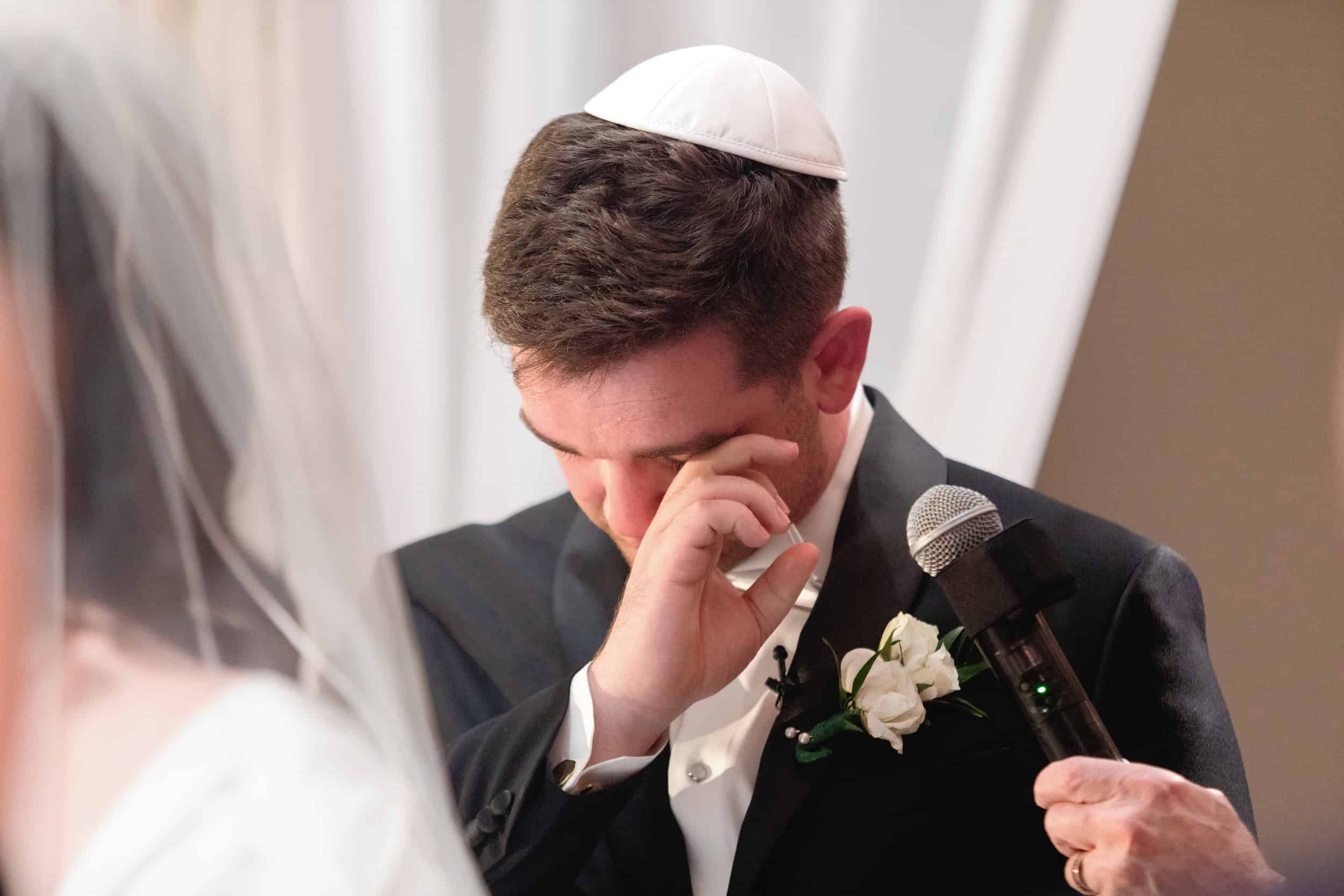
In Orthodox and Conservative Jewish weddings, immediately following the Tisch, once the groom has reached the bride, he will veil her face in anticipation of their formal wedding ceremony. This act is an homage to the biblical story of Jacob being tricked into marrying the wrong sister. The veiling, known as the Bedeken, is rare for Reform Jewish weddings. But for the weddings that do partake in this ritual, it’s a deeply felt moment, full of happy tears, bouts of laughter, and family and friends forming a tight community around the couple.
The Chuppah
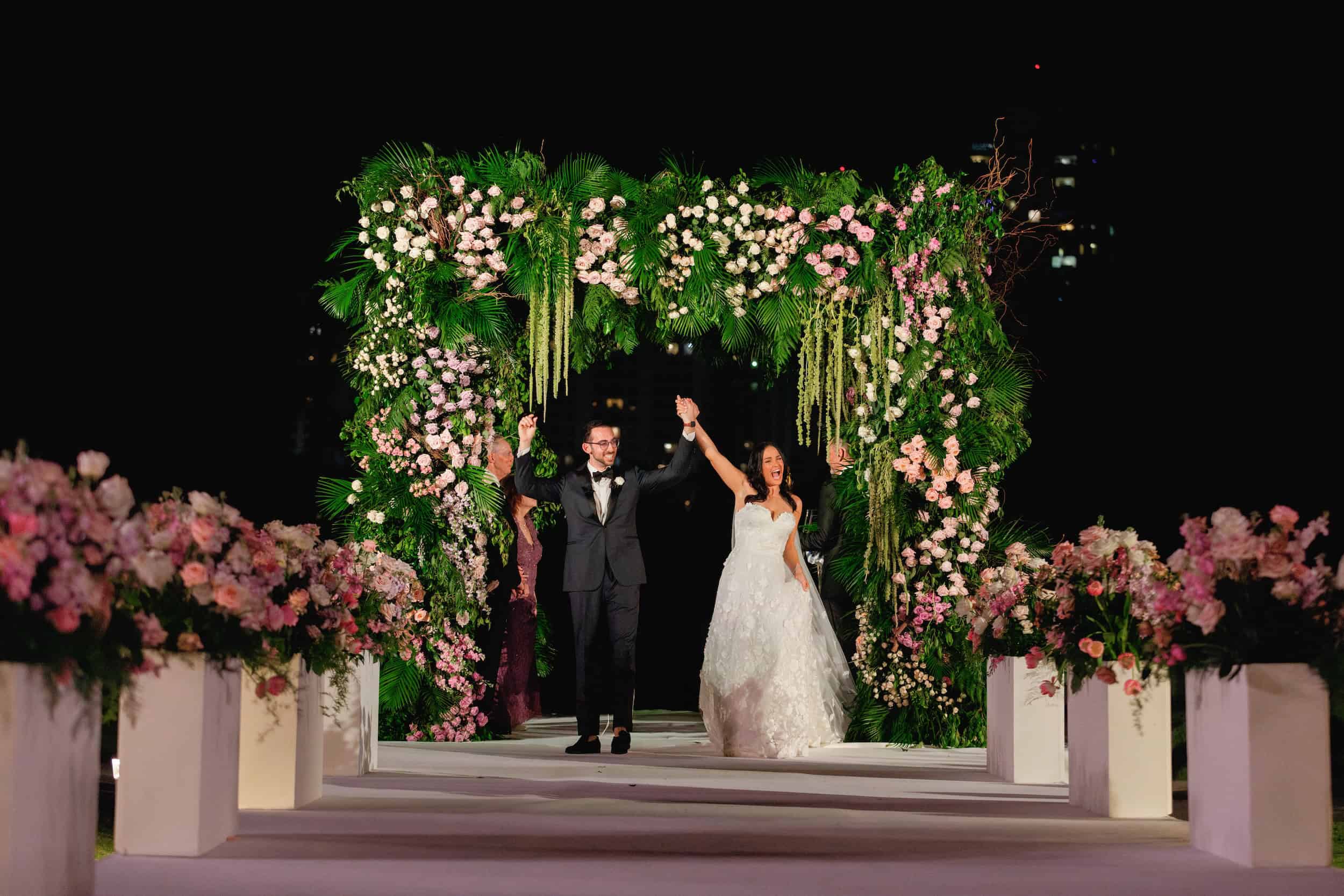
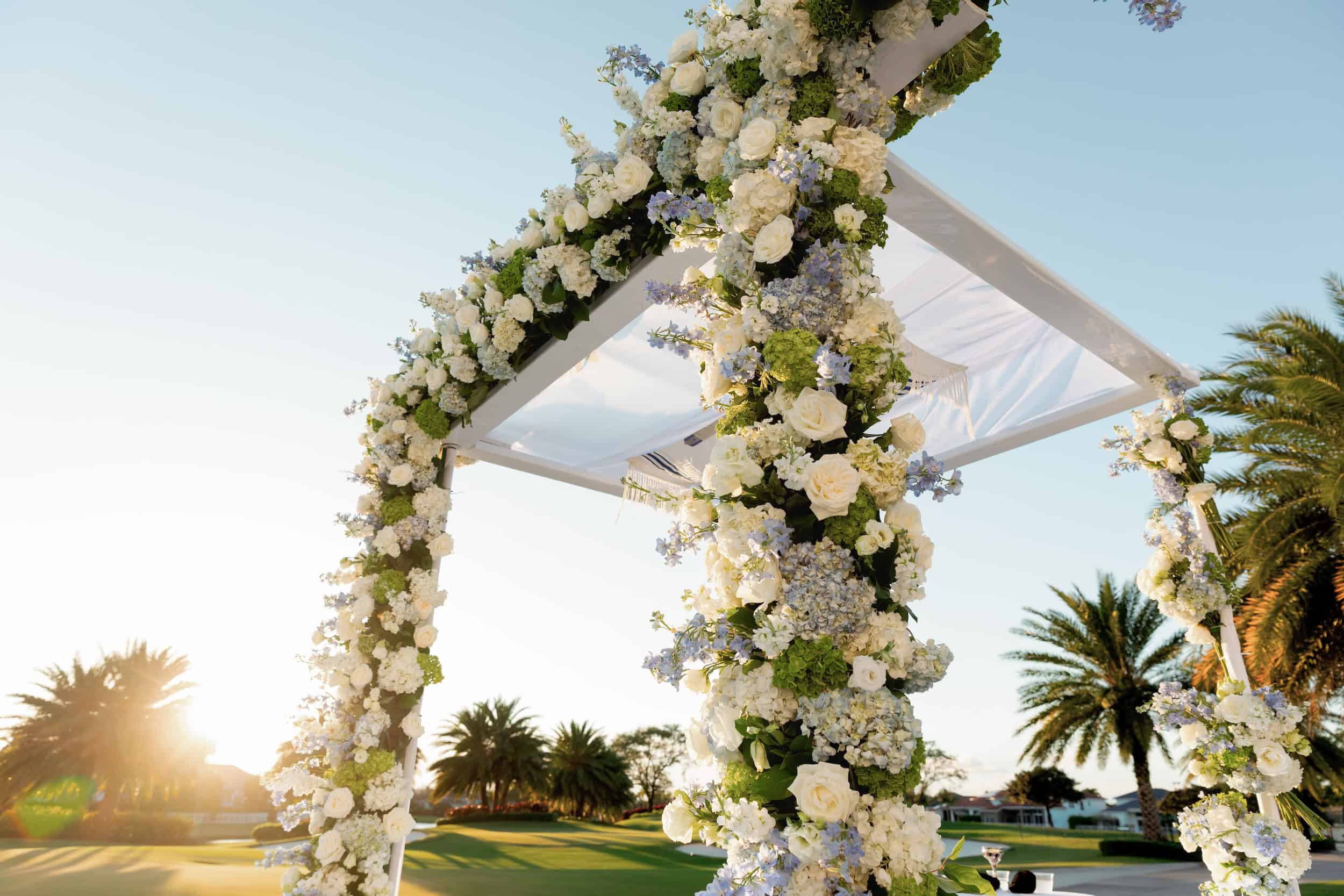
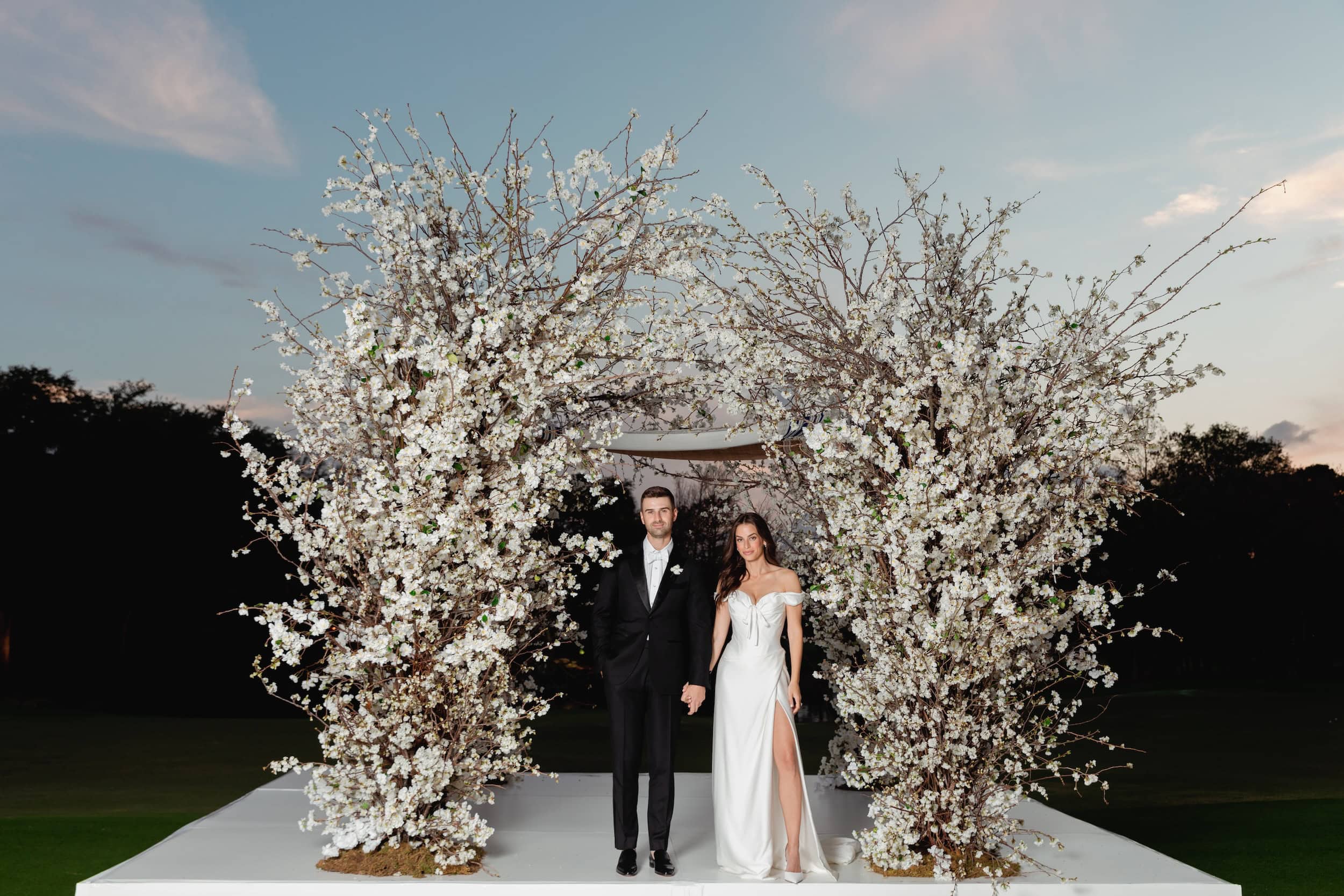
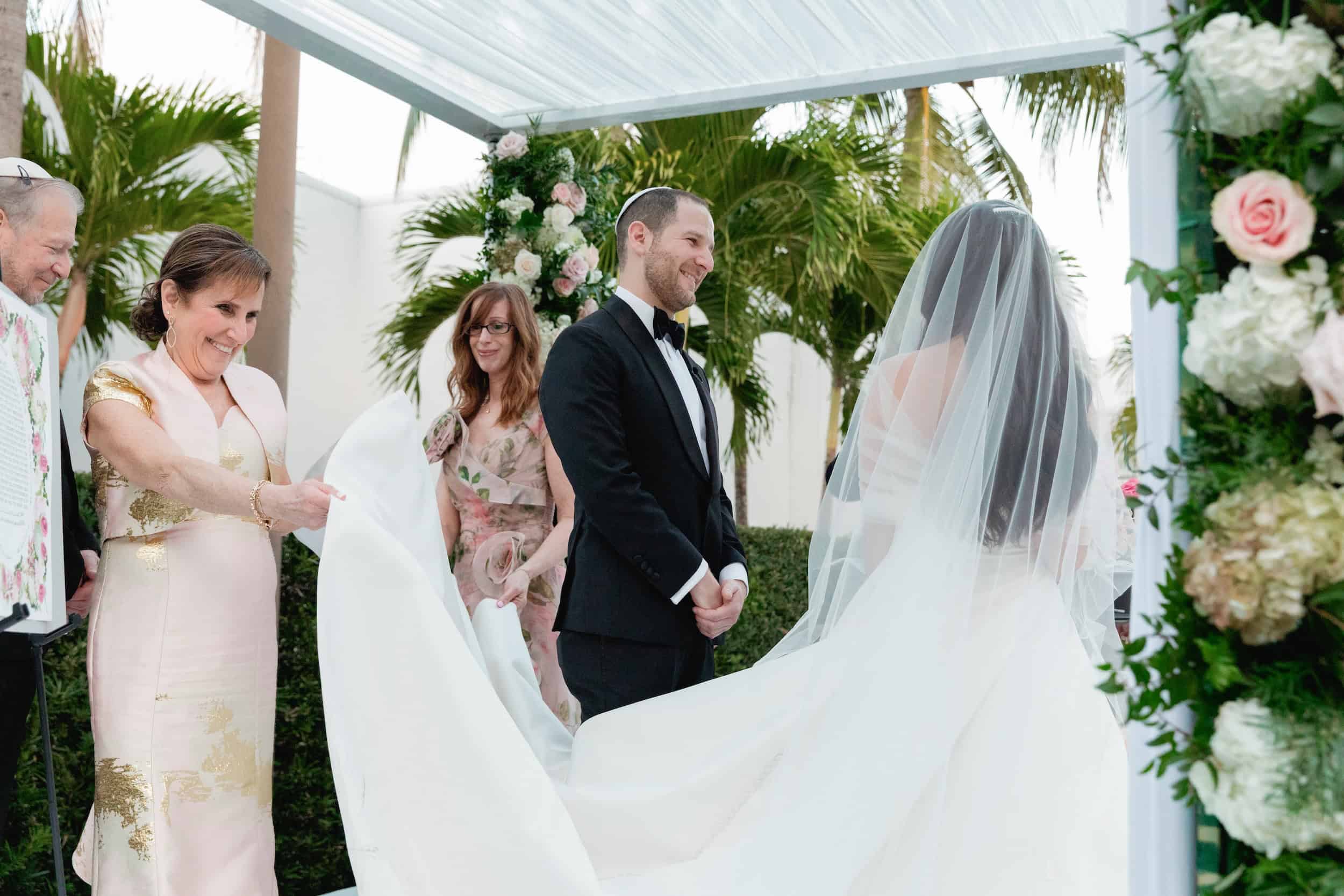
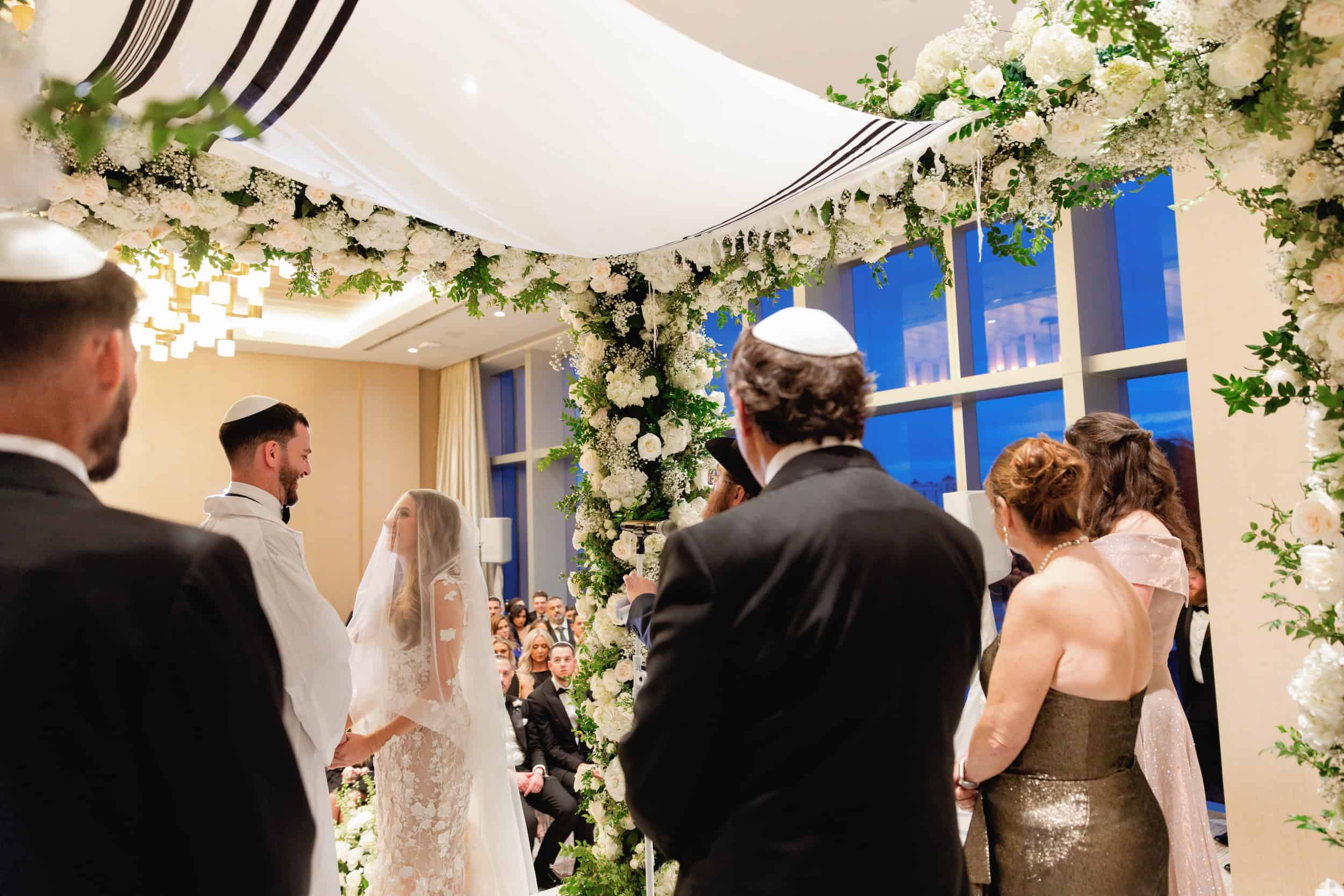
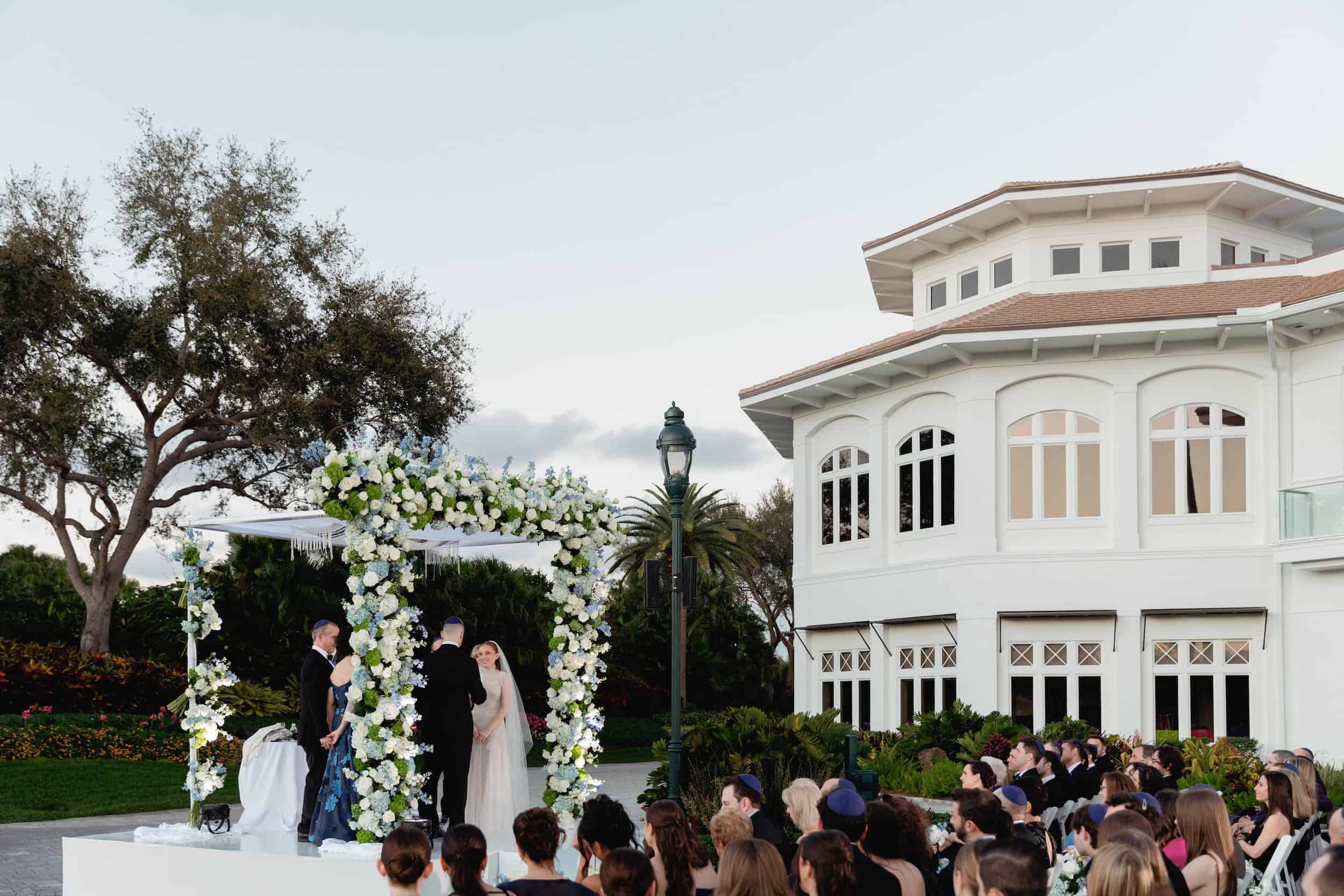
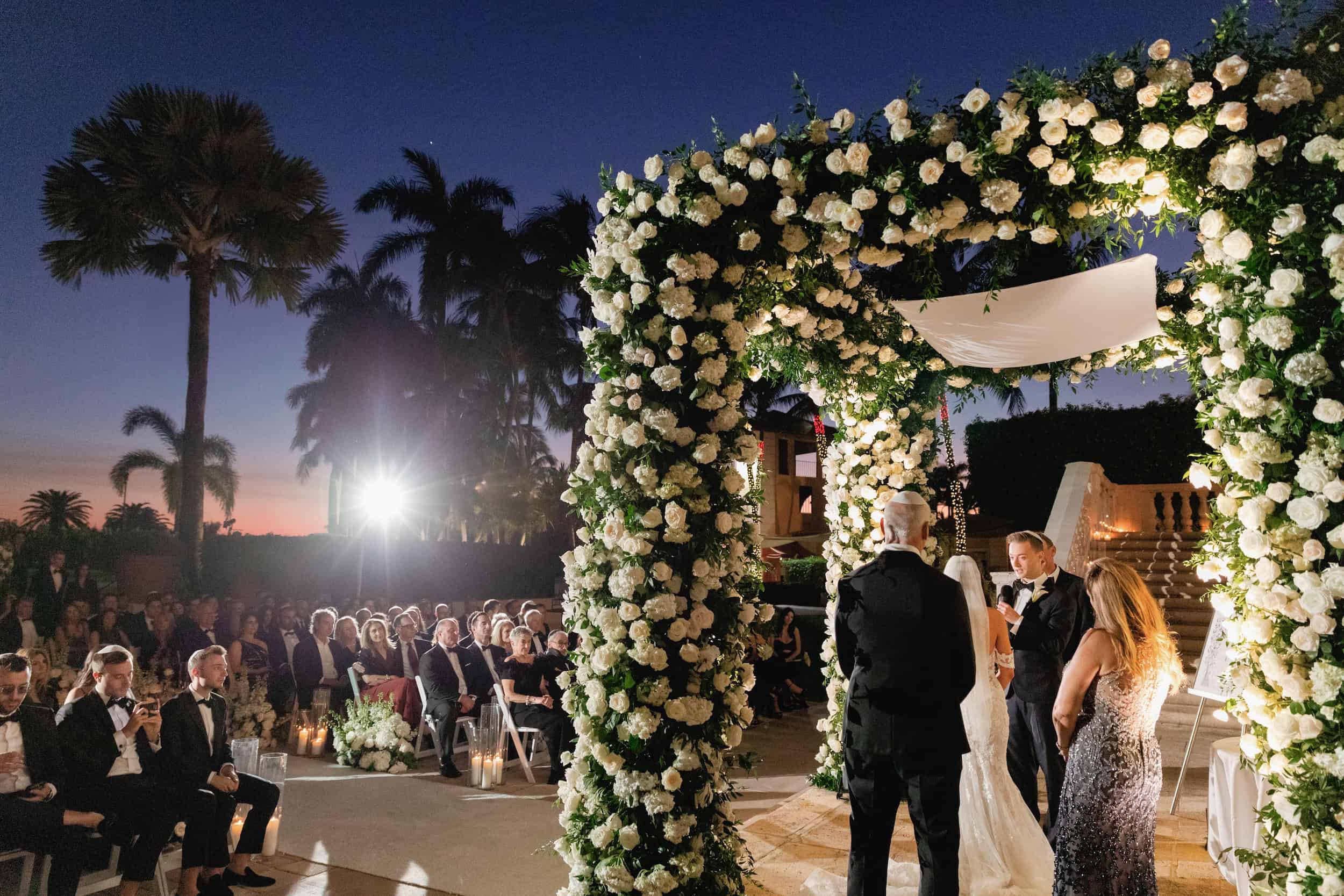
Undeniably, the heart of a Jewish wedding ceremony is the Chuppah. It’s by far one of the most visually stunning pieces of symbolism seen throughout the day. The Chuppah represents the home the couple is choosing to build together, with four posts and open sides, which symbolize the welcome they will extend to their friend and family through hospitality and a sense of togetherness.
However, not all Jewish wedding ceremonies held in Miami and South Florida will have an affixed Chuppah. Some couples will choose to use a family tallit in place of a Chuppah, while others select an elegant yet simplistic cloth Chuppah held up by four family members. Furthermore, other couples will work with their florist to build a large-scale custom structure as their Chuppah.
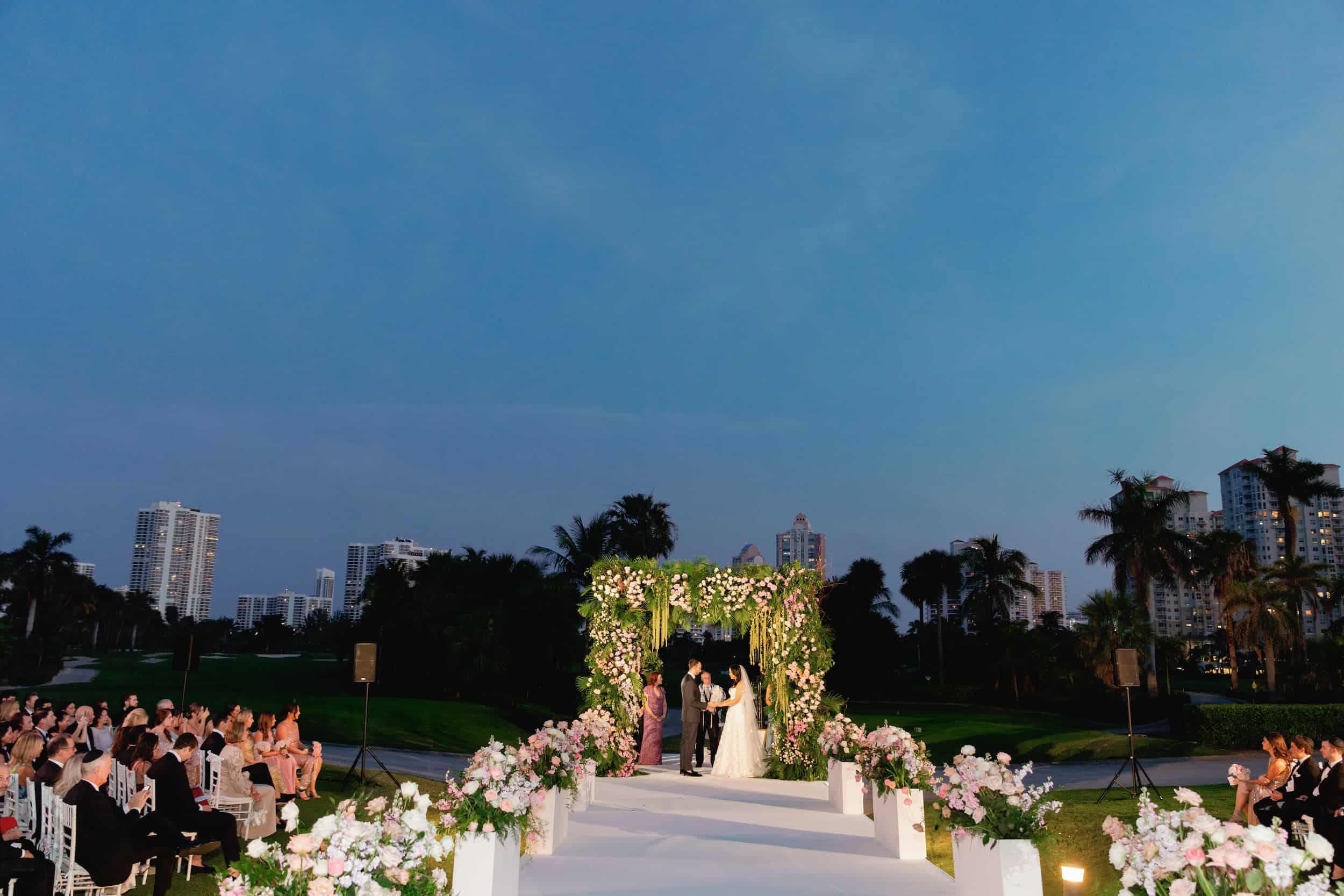
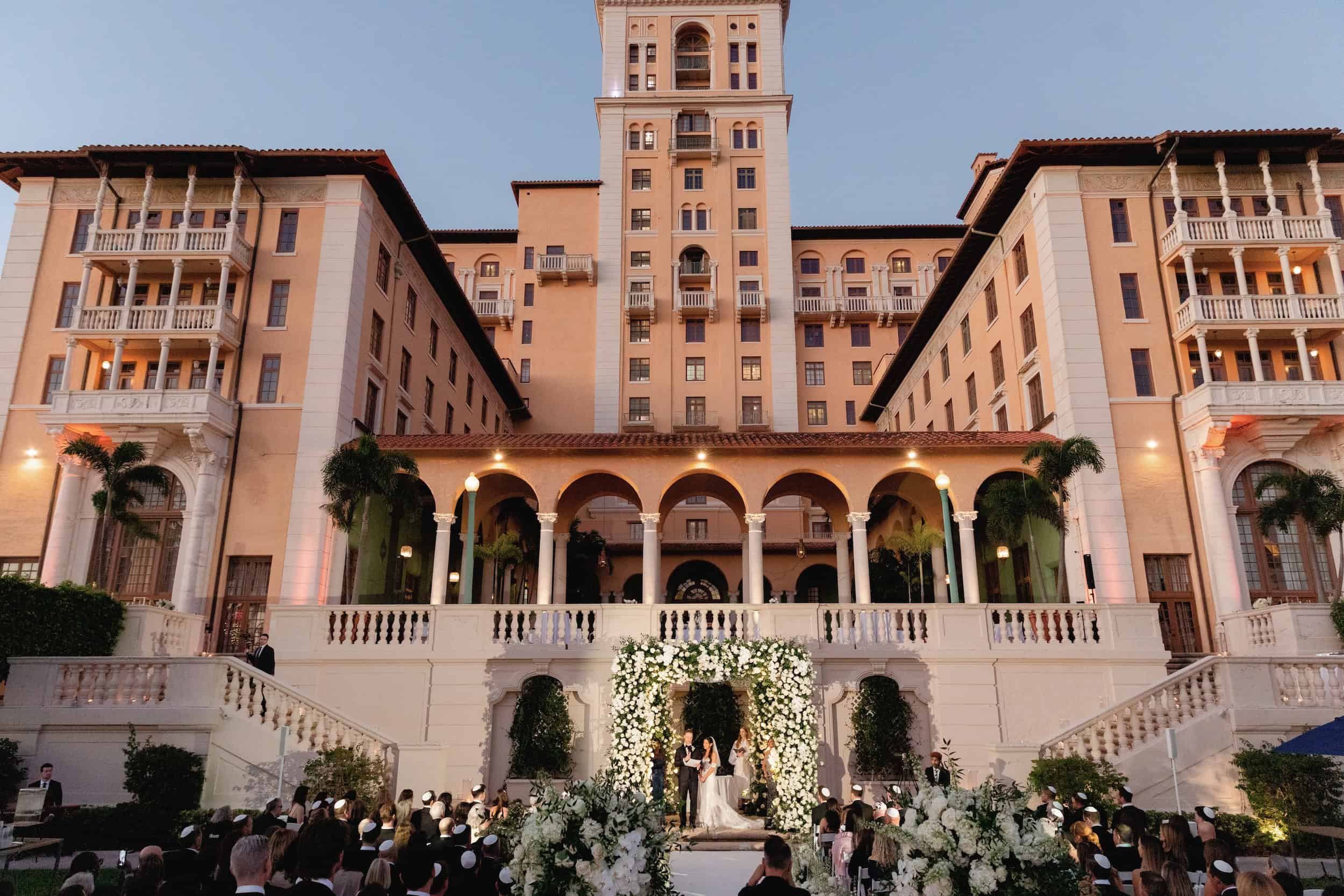
Regardless of the style of Chuppah selected for a Jewish wedding, it will frame the ceremony space, including guests’ seating, lighting, and the backdrop. Vows, blessings, and ceremony photography all happen here at the symbolic representation of the new home the couple is choosing to build together.
The Processional and Circling
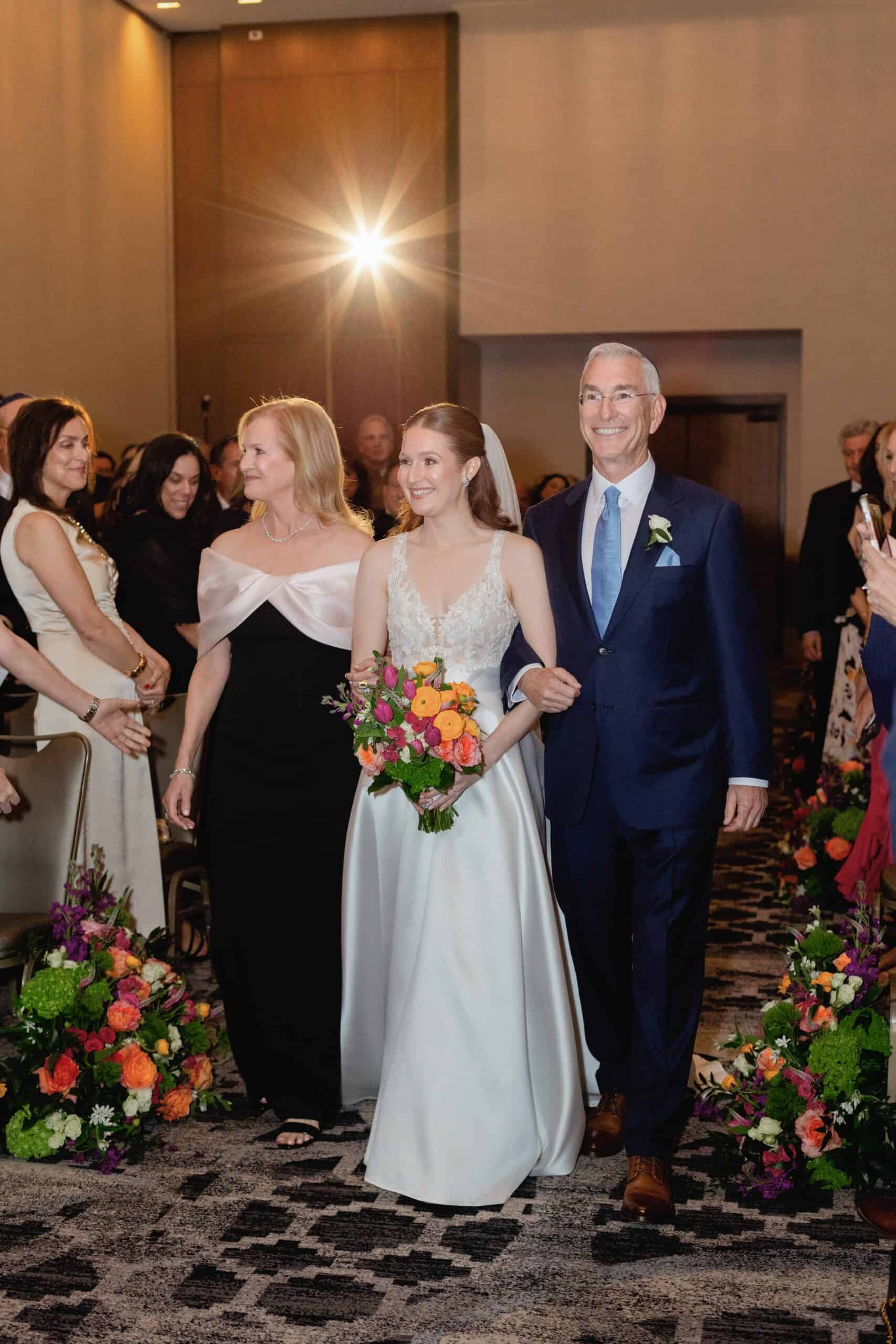
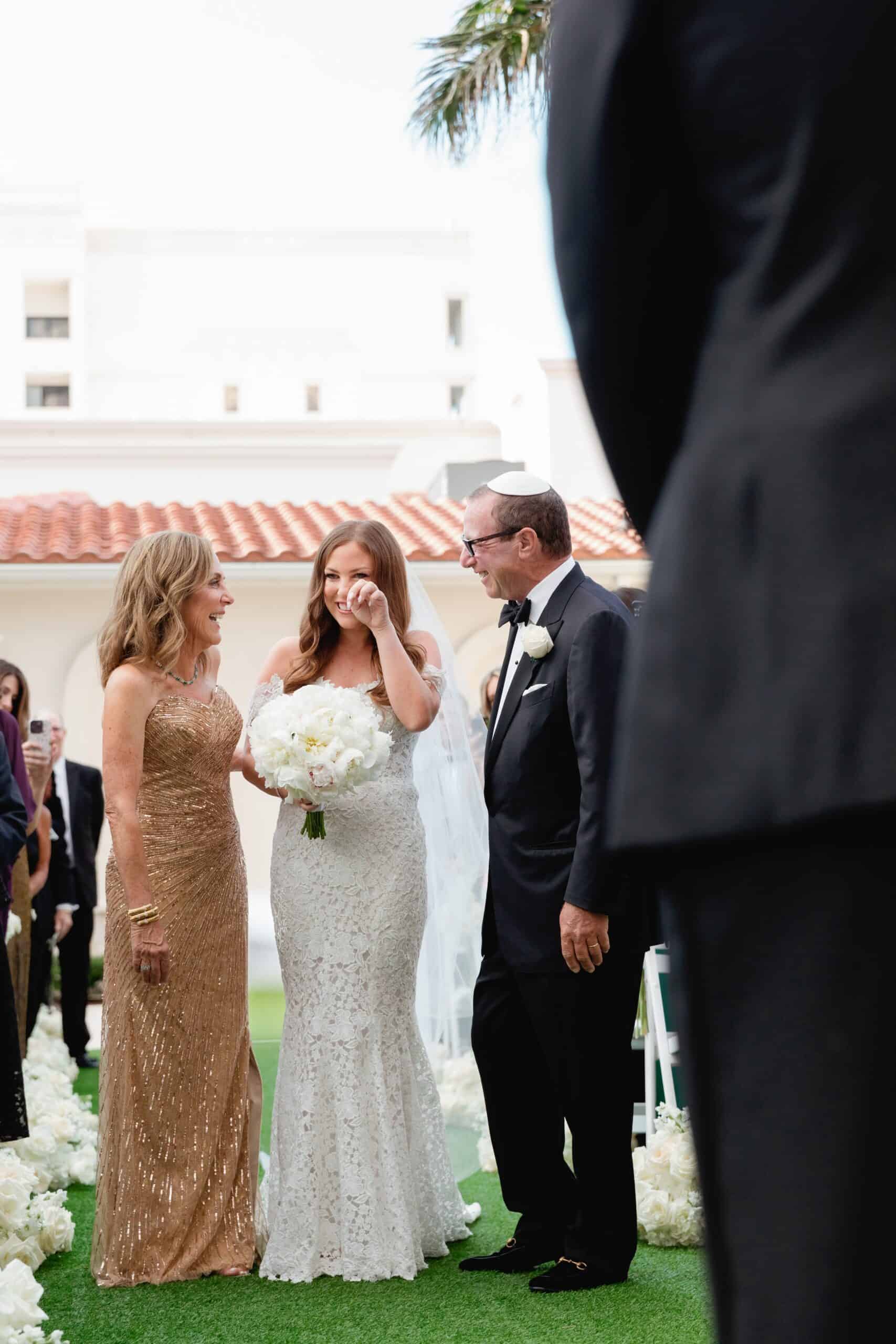
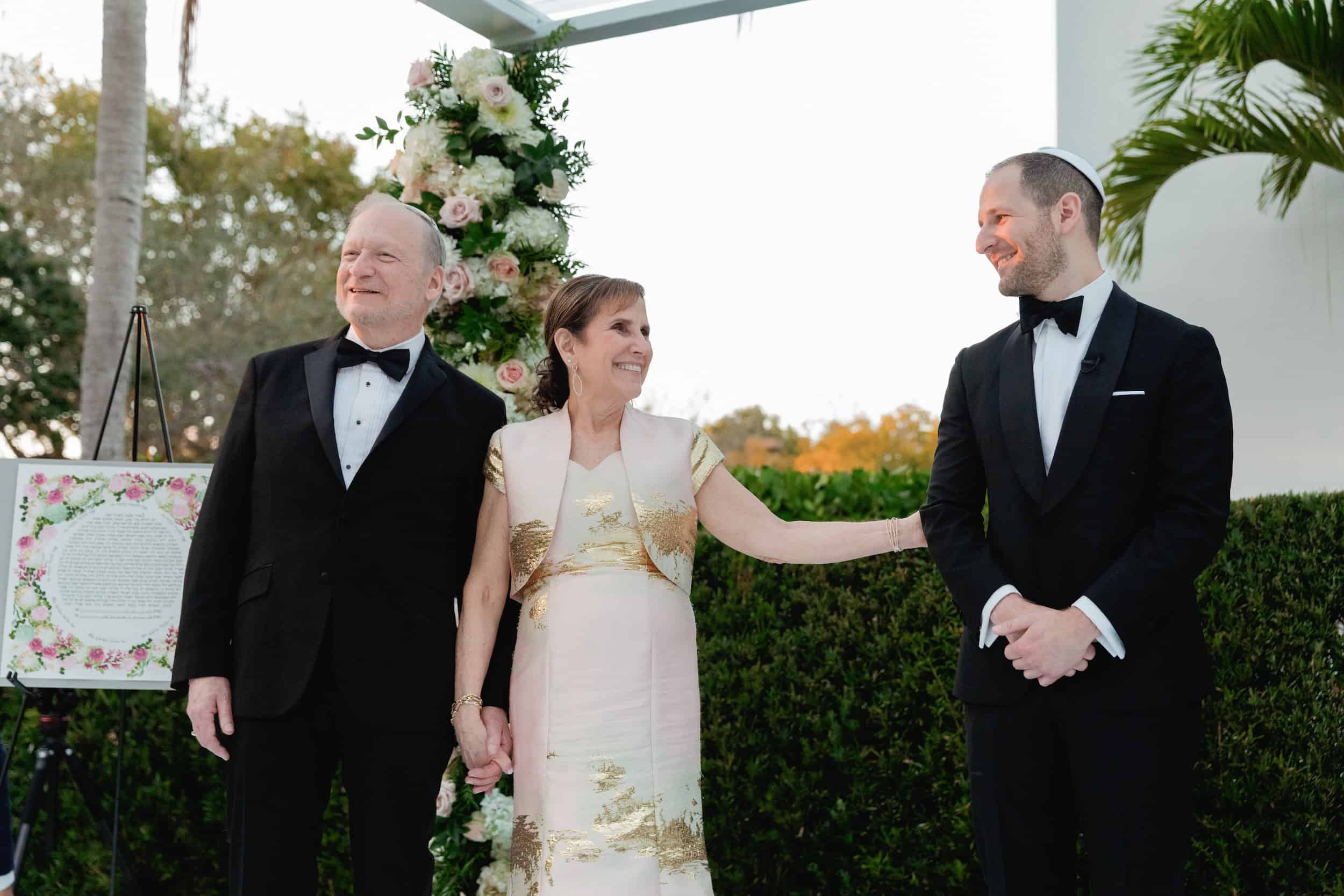
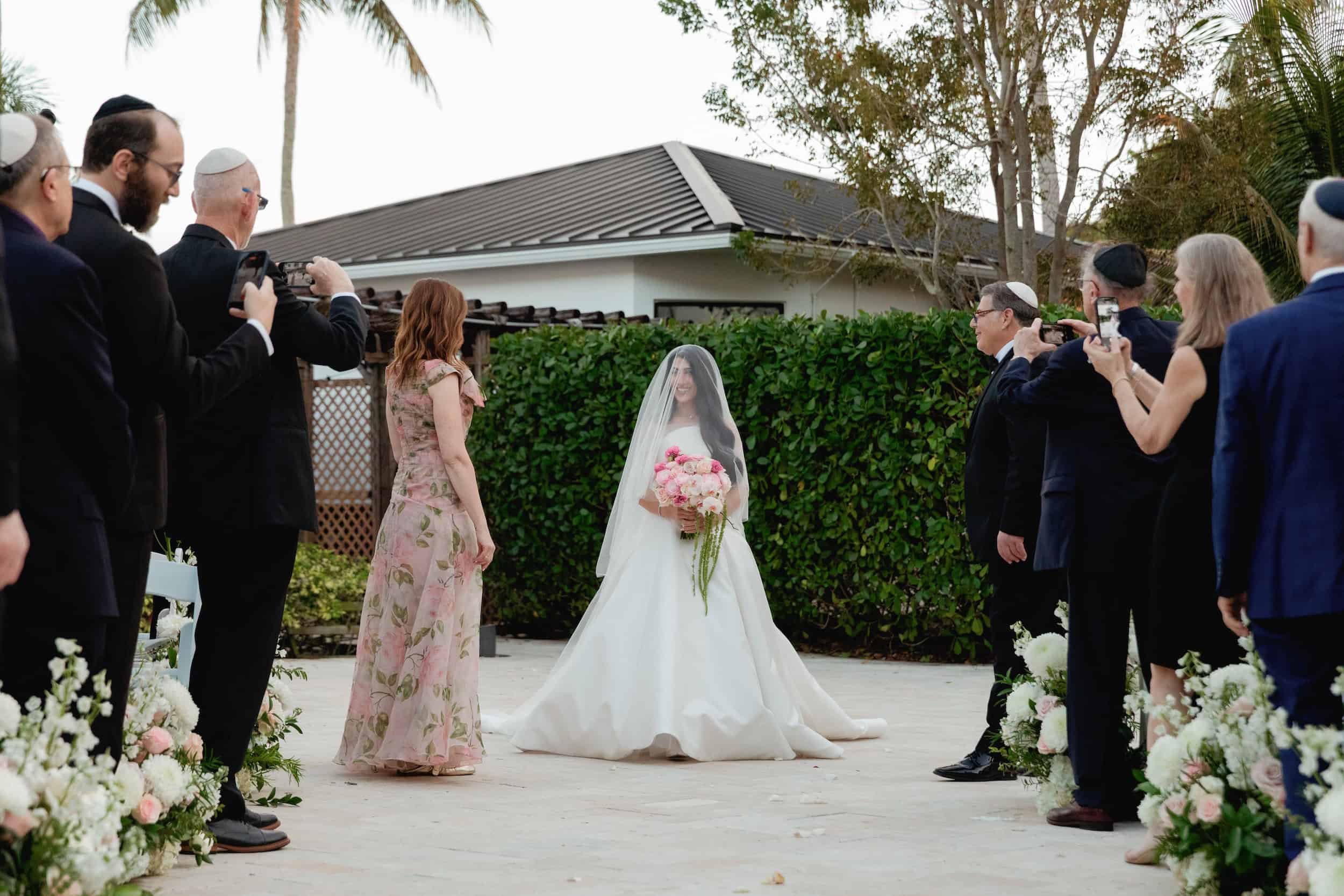
At the start of a traditional Jewish wedding ceremony, the bride and groom will be walked down the aisle by both of their parents on their way to the Chuppah. Being brought down the aisle by both parents is a detail that has always been specific to Jewish weddings, and often surprises guests who are unfamiliar with the custom, creating magnificent photos of delighted guests who are honored to witness this beautiful tradition.
In Orthodox and traditional Jewish wedding ceremonies, once the bride has been brought to the groom under the chuppah, she will circle him seven times (or three times in the Egalitarian version). The meaning of the seven circles is to show the intention of building a safe, sacred, and private world together, with their partner at the center. Jewish weddings with a progressive approach, including Reform, Conservative, and Reconstructionist, sometimes skip or even modify this practice wth the couple mutually circling one another to represent equality.
The Seven Blessings (Sheva Brachot)
Known as the Sheva Brachot, the Seven Blessings will be bestowed upon the couple under the Chuppah and are usually recited or sung over a cup of wine. The seven blessings, recited in Hebrew, can be read by rabbis, cantors, or honored friends or family members.
When a couple personally selects a friend or family member to recite the seven blessings, it is often done with intention, telling the story of who they are closest to and who can be entrusted with this sacred ritual. Photos captured during this occasion depict heartfelt emotion, as the blessings bestowed symbolize joy, delight, love, harmony, peace, and companionship.
The seven blessings also experience their own version of a progressive take, with Reform Jewish wedding ceremonies sometimes translating them into a shortened version, or reciting the blessings in English.
Vows and Ring Exchange
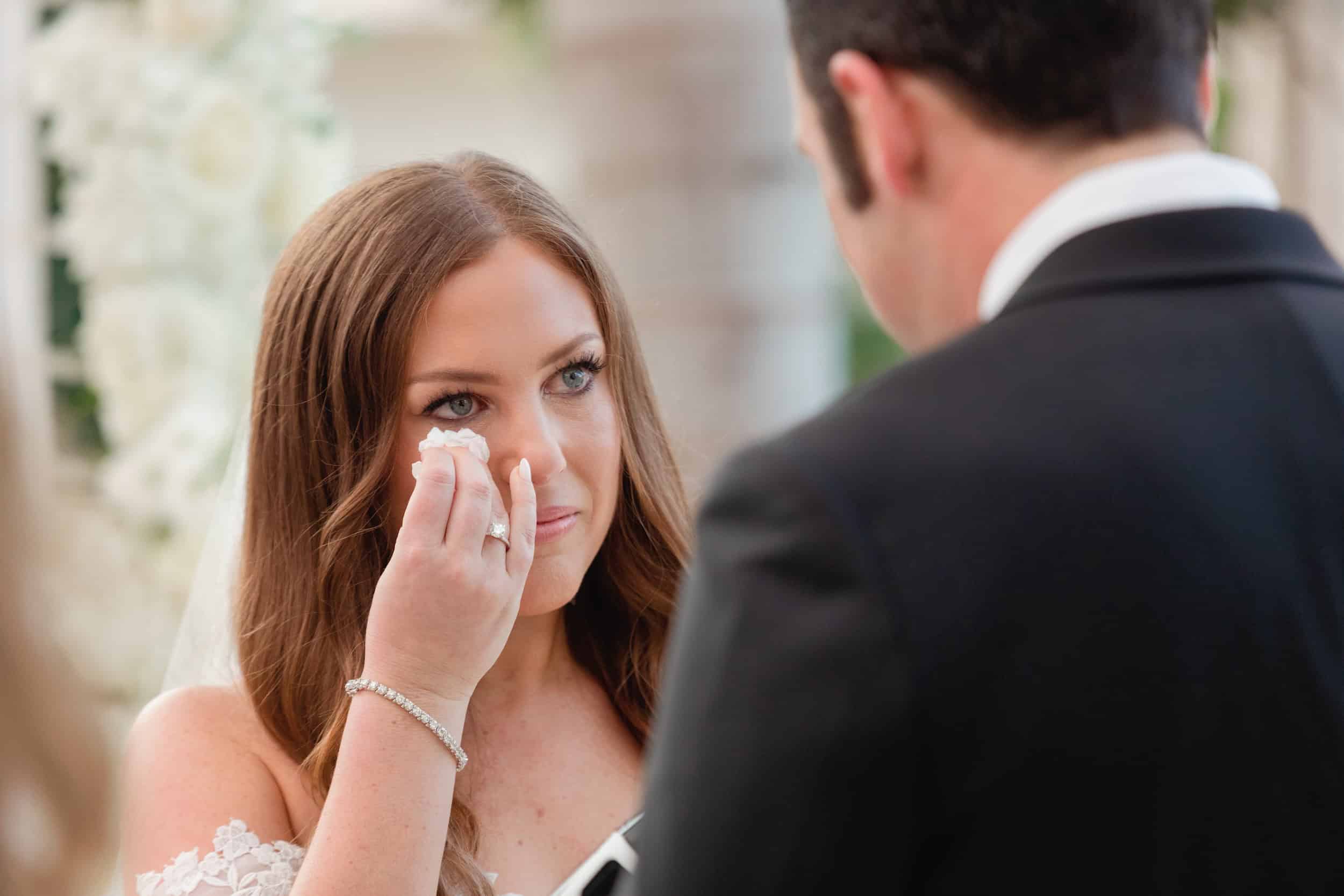
In traditional Jewish wedding ceremonies, the ring exchange is simplistic, yet done with specificity. A plain gold band is placed on the index finger, followed by a declaration recited in Hebrew. Reform and Conservative Jewish weddings sometimes choose to personalize this portion of the wedding ceremony with custom-written vows.
Whether done traditionally or with the addition of vows, it’s typically one of the quietest, most intimate moments of the day. As a Jewish wedding photographer, I strive to photograph this moment in a way that is true to the experience. This requires positioning myself to capture the shared expressions of the exchange, focusing not only on the simple beauty that represents your union (the ring) but also on the emotions that wash over you during this moment.
Breaking the Glass
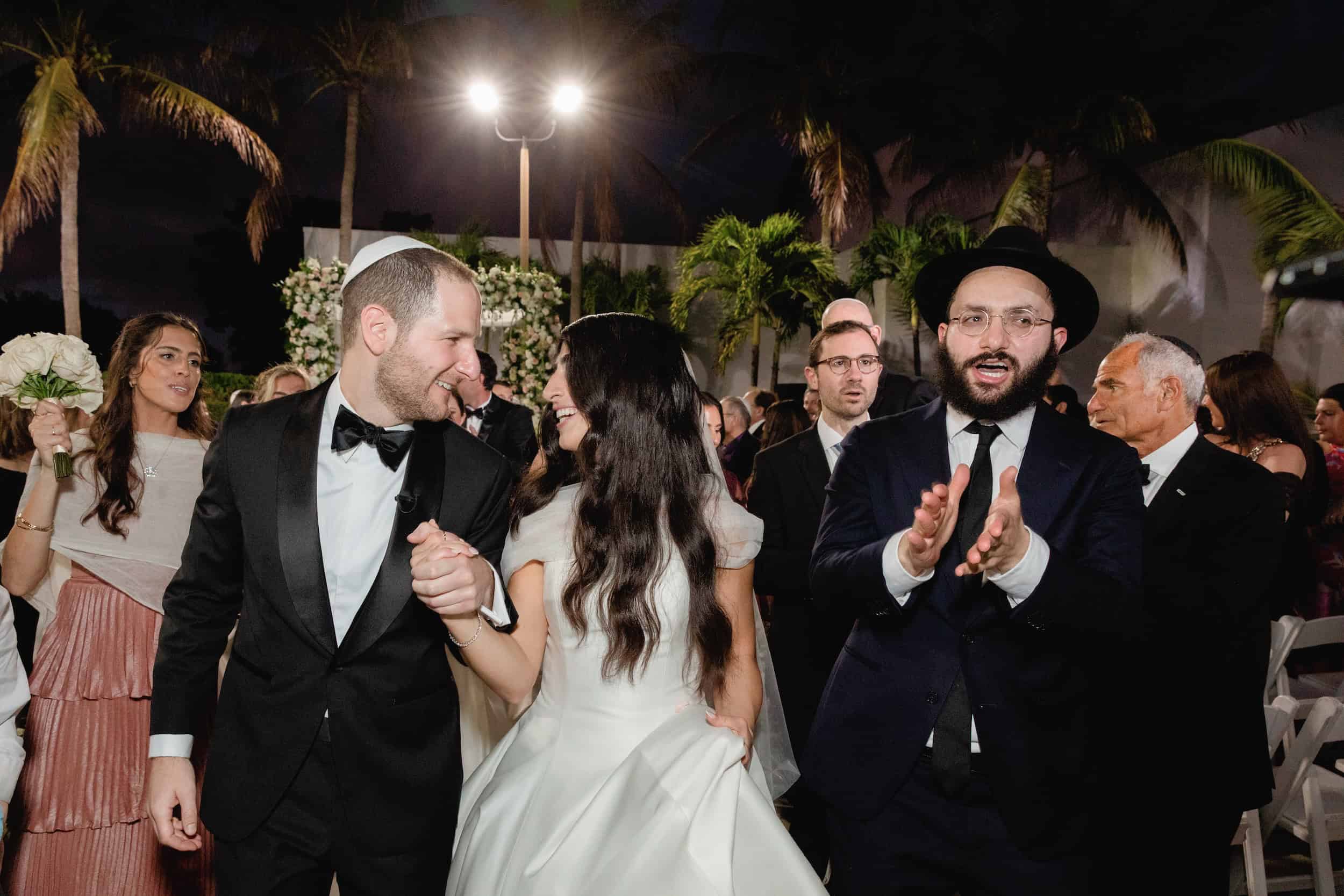
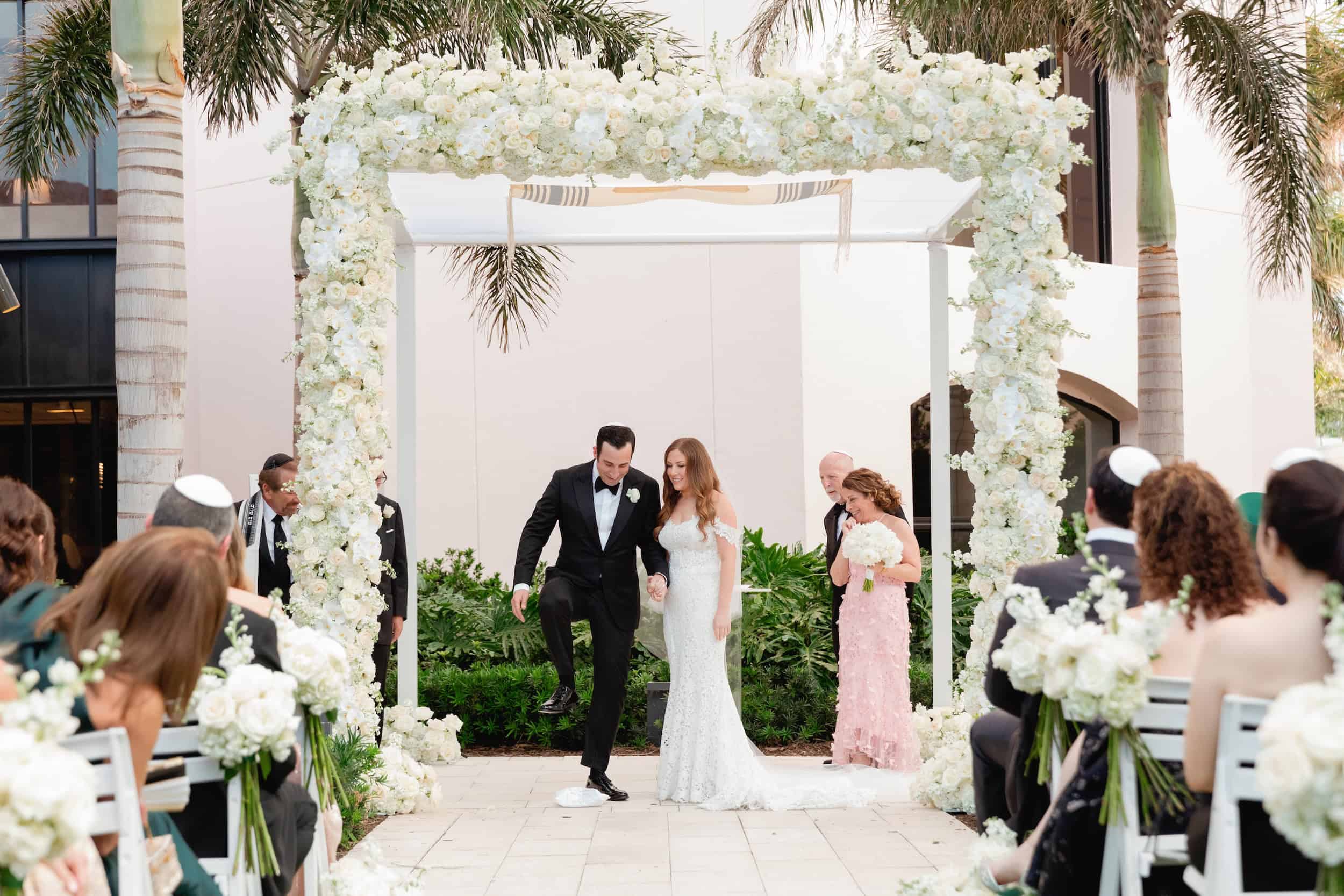
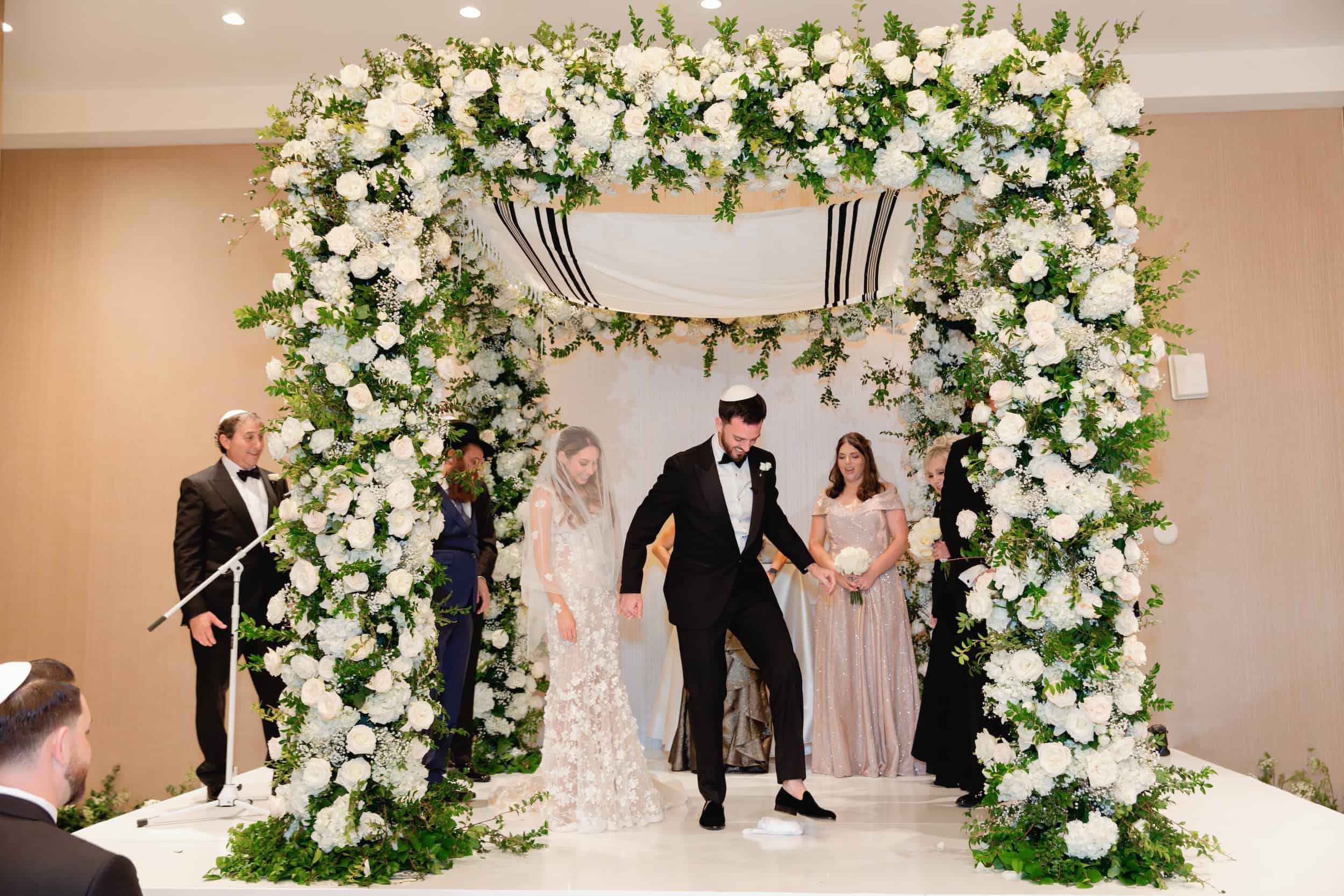
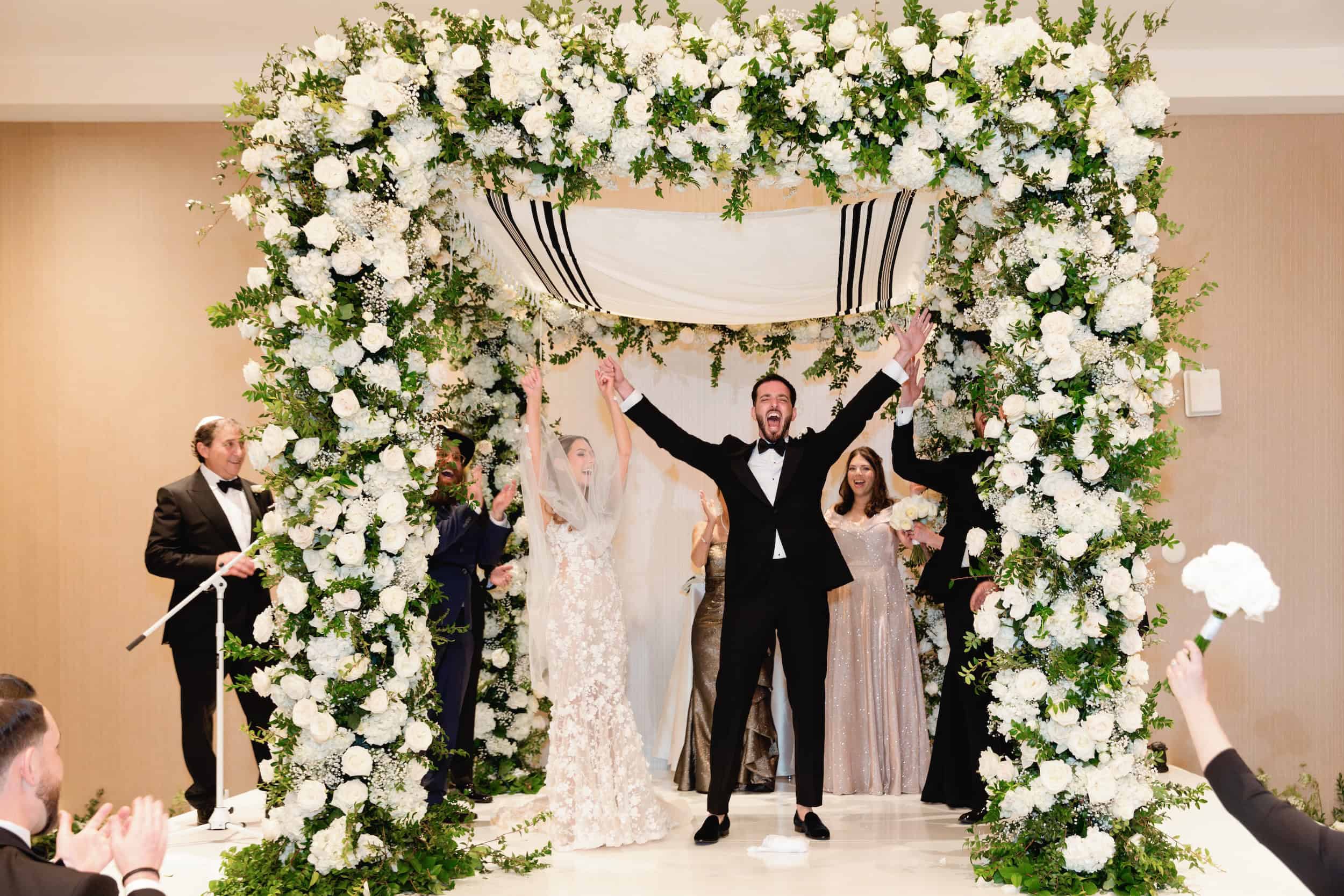
Once the ceremony is complete, the final declaration is made with the breaking of the glass. Though traditionally done by the groom, it has become more common for the newlyweds to smash the glass together. The smashing of the glass is a tradition rooted in symbolism, representing the destruction of the Temple in Jerusalem. It serves as a reminder that in life, joy and sorrow often coexist side by side. Once the glass has been smashed, a loud cheer of “Mazel Tov” will ring through the air, shouted by everyone in attendance. Without fail, this moment is usually one of the loudest bursts of cheer throughout the entirety of a Jewish wedding day.
Hora & Chair Lift on the Dance Floor
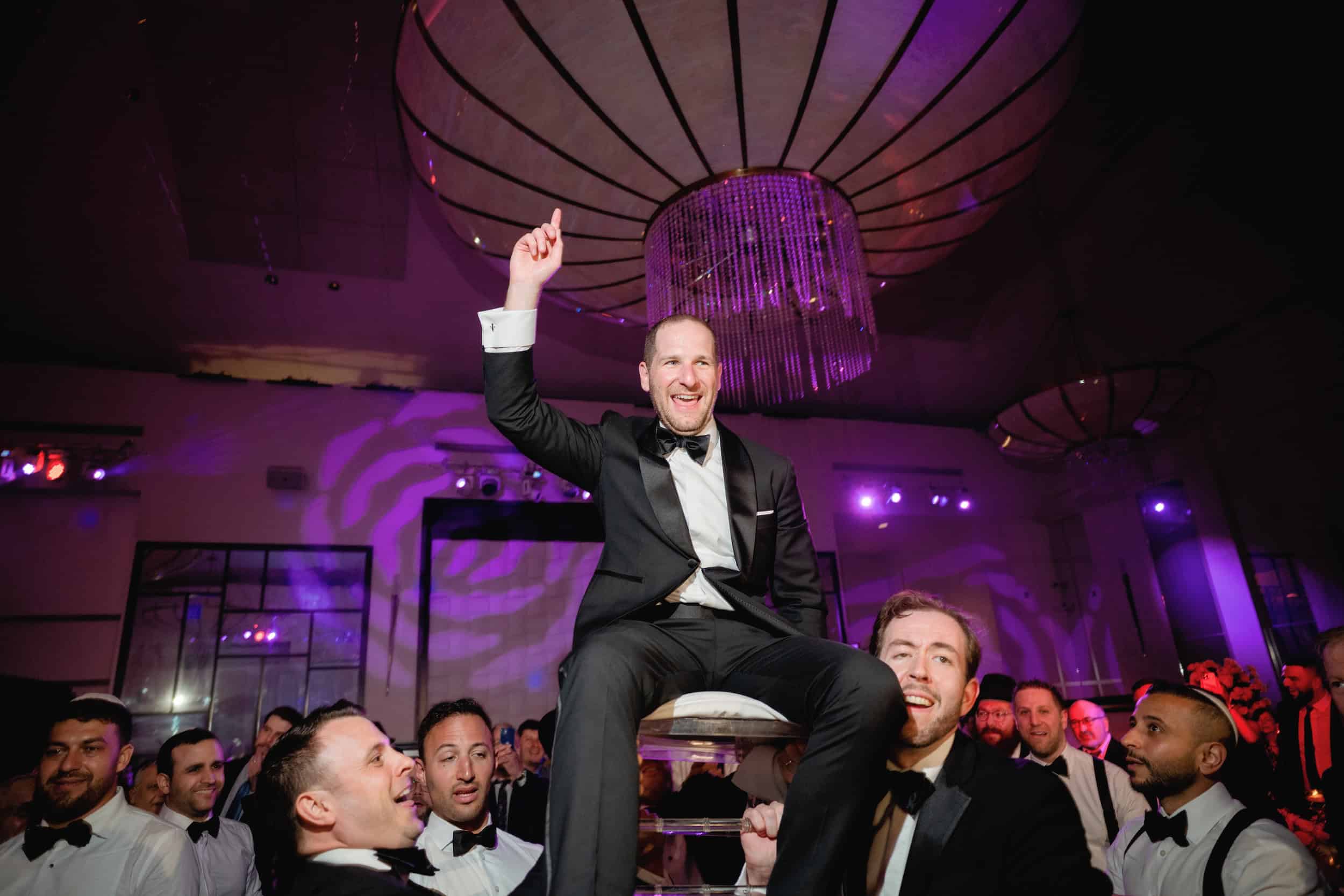
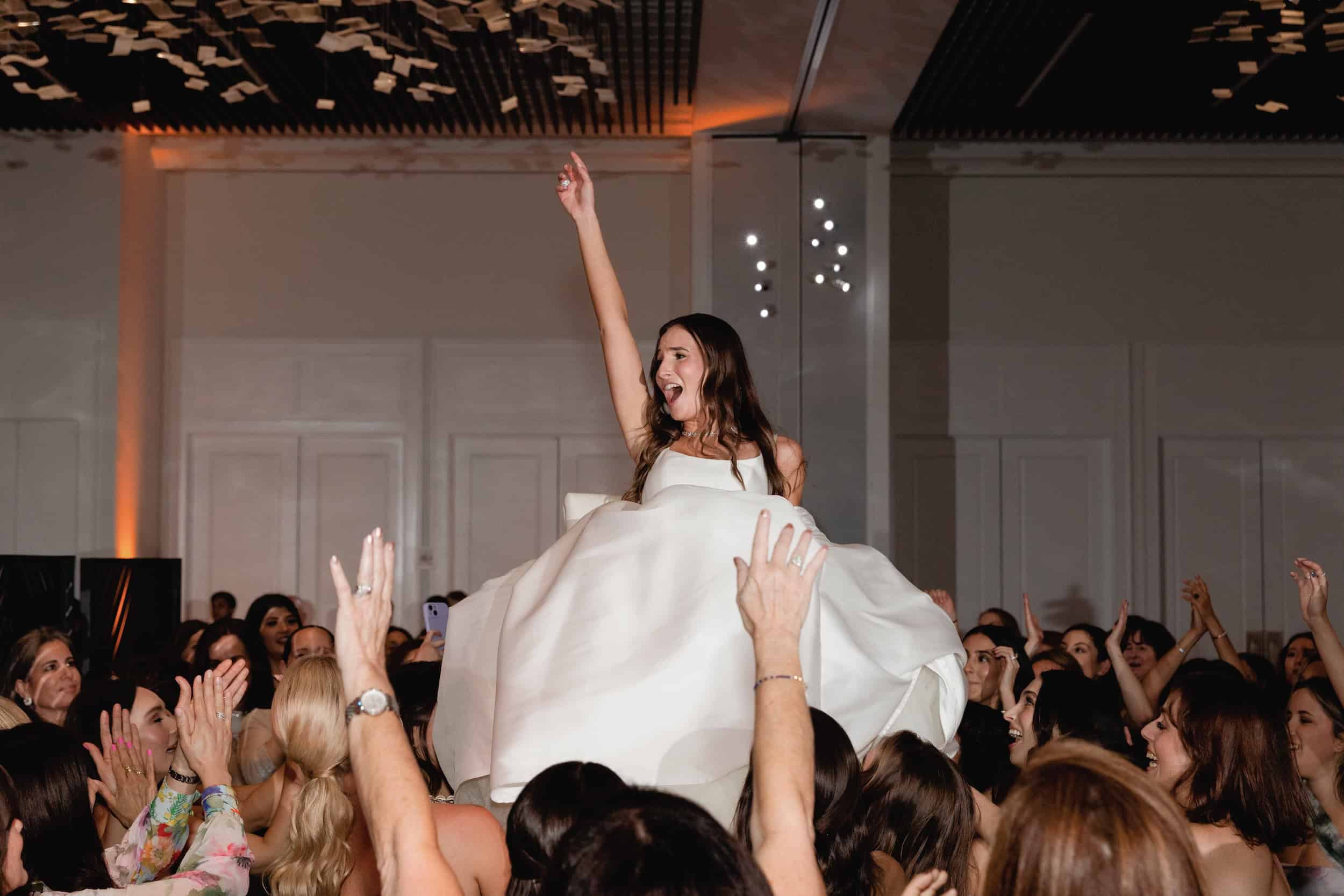
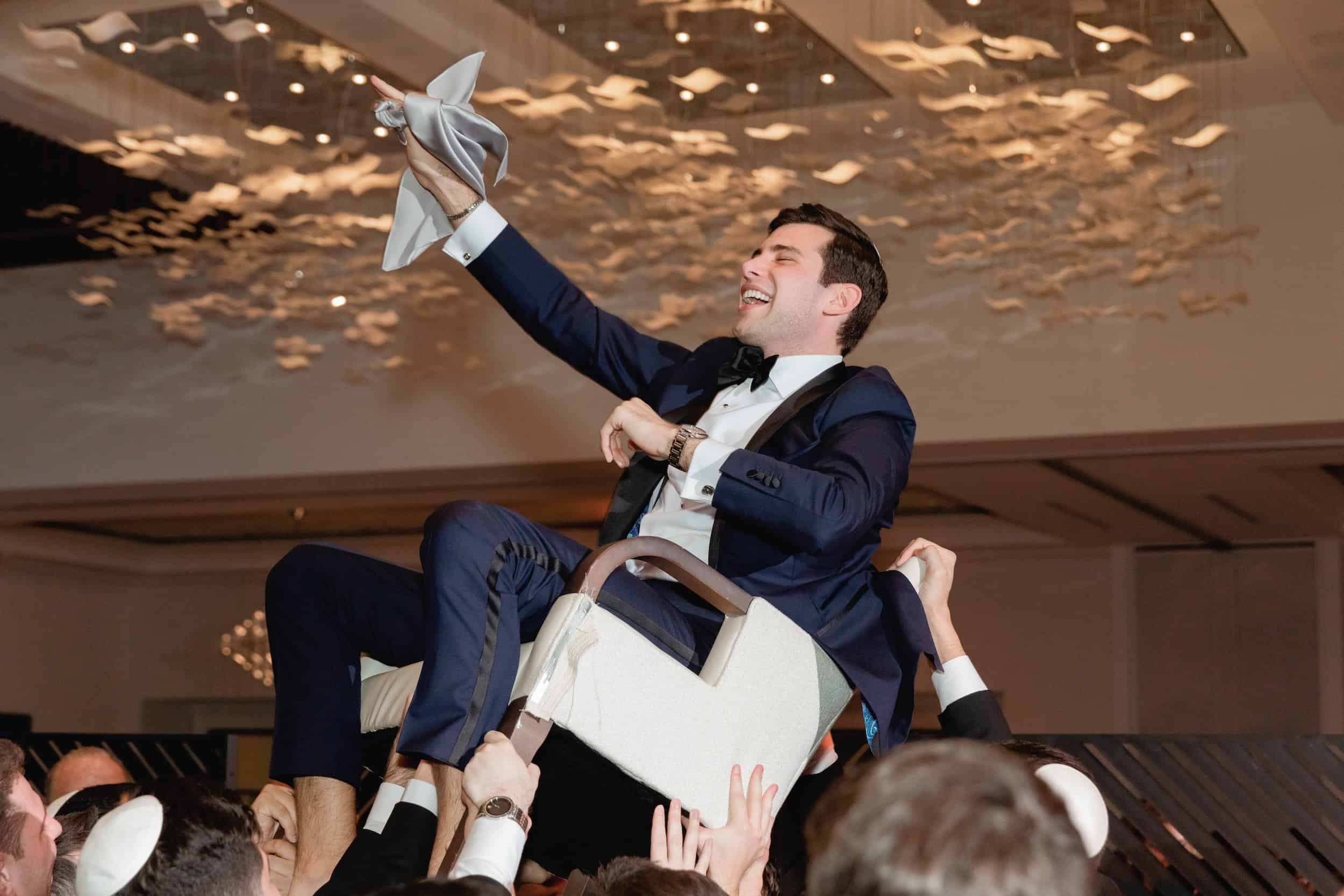
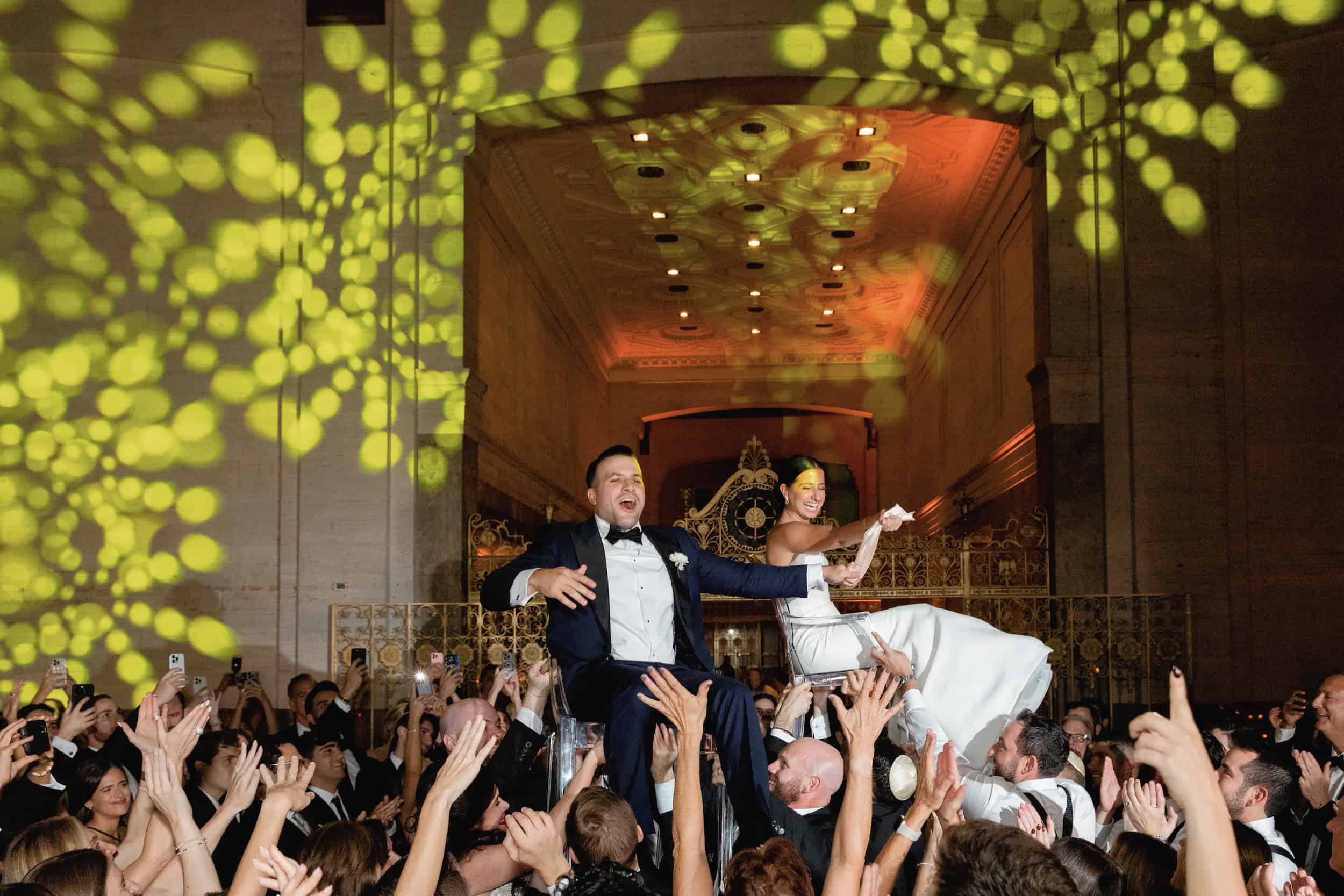
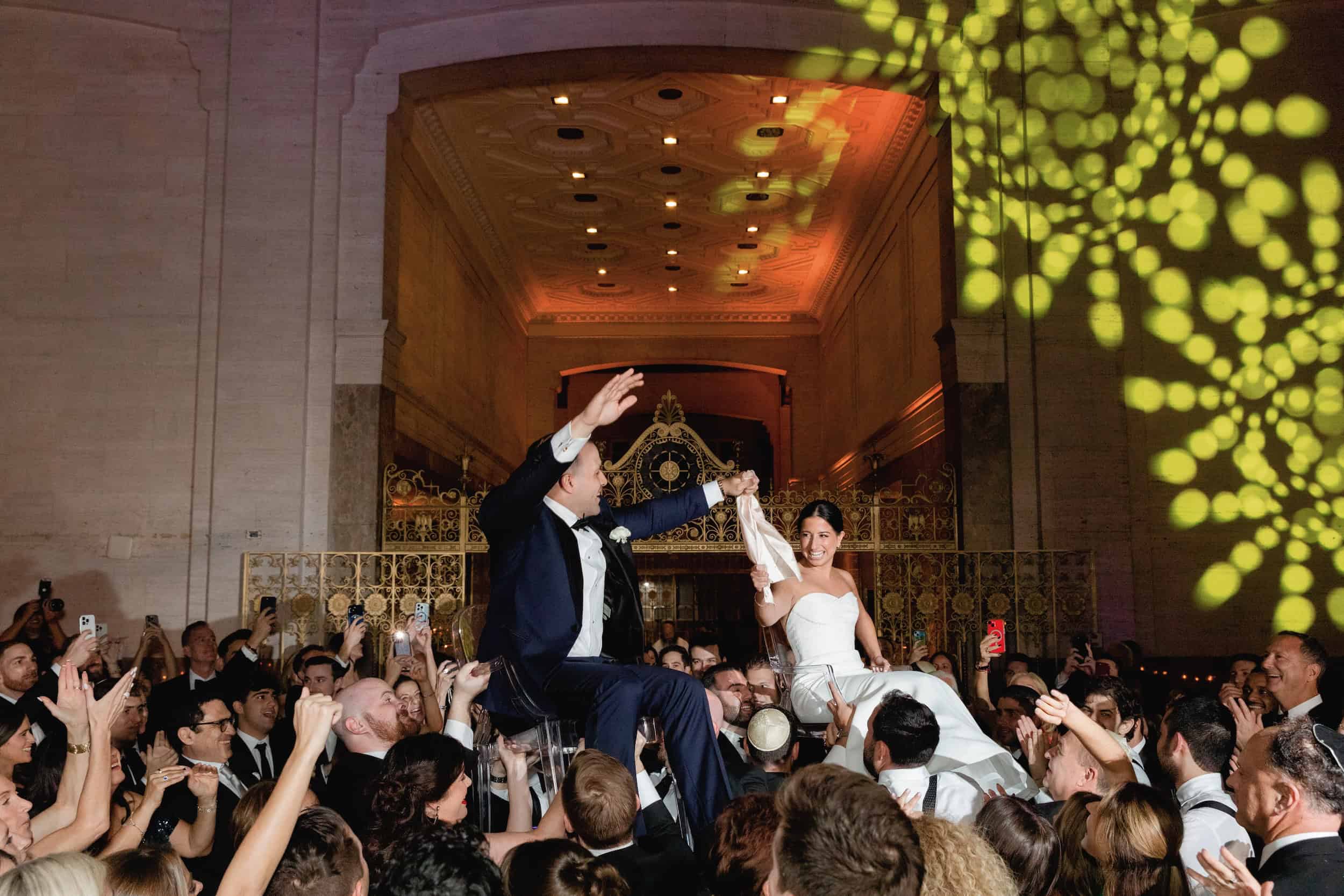
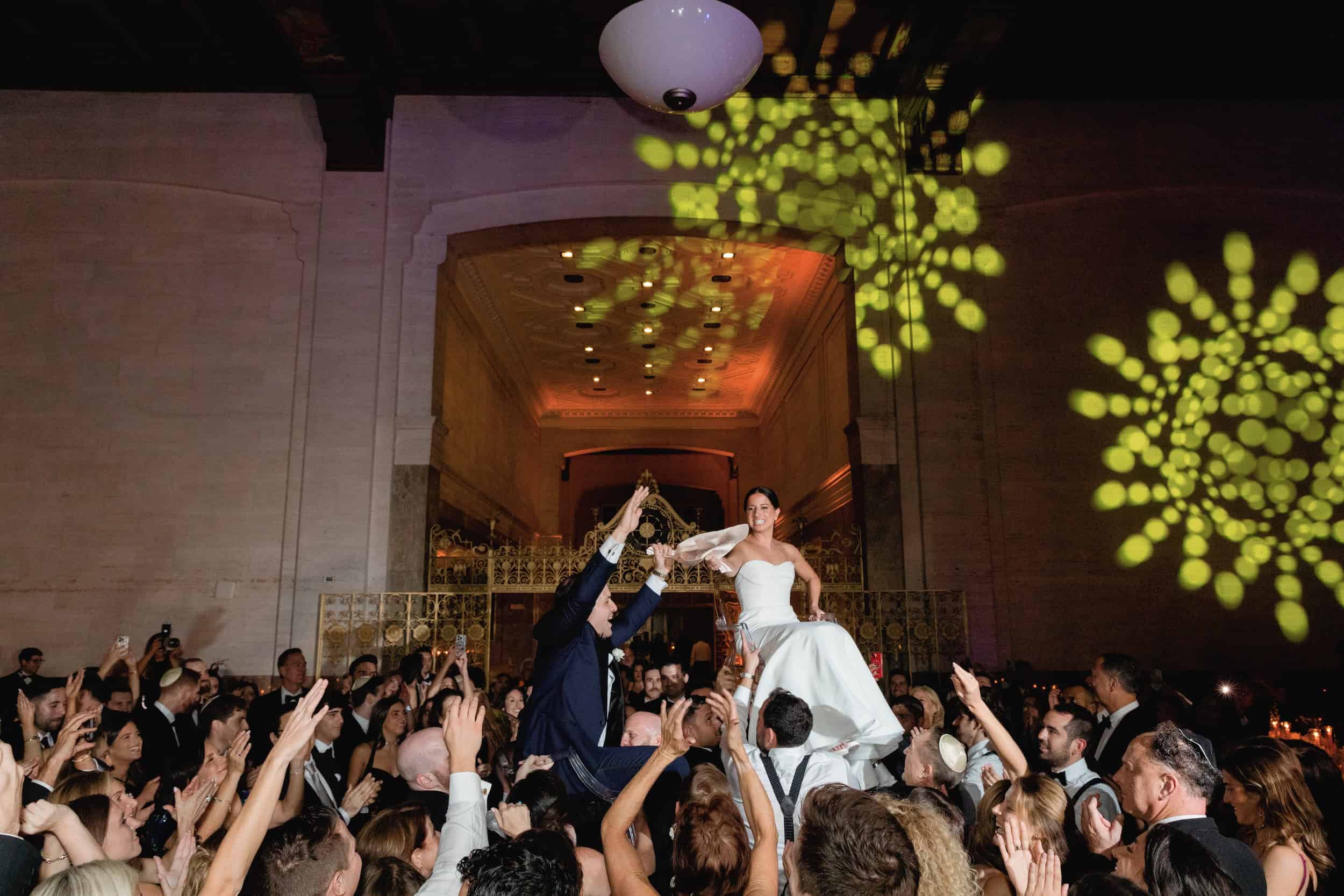
This joyful moment is part of an important yet fun tradition of a Jewish wedding reception, and no Jewish wedding celebration is complete without it. During the Hora, guests will dance together, with linked hands, encircling the couple, who are often lifted into chairs high above the crowd. Once lifted, the couple sometimes holds onto either end of a cloth napkin, connecting them throughout the dance. The energy in the room during the Hora is palpable, reaching a brand new height of celebration. As a Jewish wedding photographer, I always anticipate this moment by making sure my longest lens is affixed to my camera, ready to capture the magic happening in the room for the couple and the cherished guests who surround them on the dance floor.
Jewish Wedding Photography in Miami, Boca Raton, and Palm Beach
With nearly two decades of experience as a Jewish wedding photographer capturing celebrations in Miami, Boca Raton, and Palm Beach, Ambrosio Photography works with couples for a noteworthy photo experience, centered on connection and tradition. You can find more details on Jewish wedding photography packages & pricing when you follow this link.